
What's Happening?
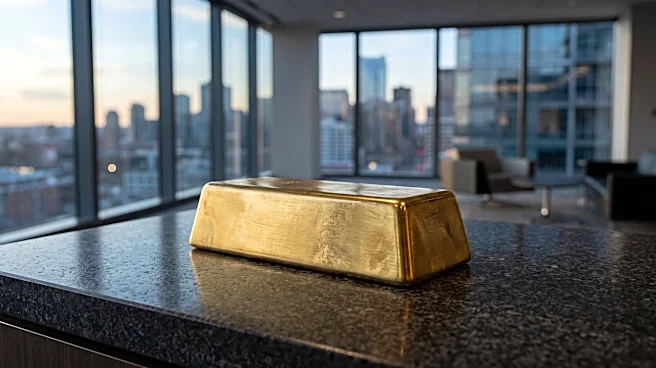
Goldman Sachs has revised down its gold price forecasts for the end of 2026 and 2027. The investment bank now projects gold to reach $4,150 per ounce by the end of 2026, a reduction from its previous estimate
of $4,650. For the end of 2027, the forecast has been lowered to $4,800 per ounce from $5,400. This adjustment is primarily attributed to the Federal Reserve's increasingly hawkish monetary policy, which is expected to limit investor demand for gold. Goldman Sachs strategists, led by Lina Thomas, indicate that the Fed's tighter policy stance, including an anticipated interest rate increase in December, will diminish gold's appeal as a hedge against currency depreciation and broader economic policy risks. Higher interest rates generally reduce the attractiveness of gold because it does not yield interest income, making interest-bearing assets more appealing. Despite these near-term adjustments, Goldman Sachs maintains a positive long-term outlook for gold, largely due to sustained substantial purchases by central banks.
Why It's Important?
This revision by Goldman Sachs signals a significant shift in market expectations for gold, reflecting the powerful influence of the Federal Reserve's monetary policy on commodity markets. A hawkish Fed, characterized by higher interest rates, typically strengthens the U.S. dollar and increases the opportunity cost of holding non-yielding assets like gold. This makes gold less attractive to investors seeking returns, potentially diverting capital towards other assets. The reduced price forecasts could impact investment strategies for individuals and institutions holding or considering gold as part of their portfolios. Furthermore, it highlights the ongoing debate about gold's role as a safe-haven asset in an environment of rising interest rates. While central bank demand remains a strong structural support for gold prices, the short-to-medium term outlook is now more challenging for private investors, who may see reduced returns or increased volatility.
What's Next?
Goldman Sachs anticipates that gold prices could receive additional support when the Federal Reserve eventually begins reducing interest rates, which their economists project to start in late 2027 and continue into early 2028. This potential easing of monetary policy could alleviate pressure on gold and encourage renewed private investment demand. However, for the immediate future, the outlook remains challenging, especially if the Fed raises rates again in March 2027, delays monetary easing, or increases its projected terminal interest rate. Such scenarios could lead to further downward pressure on gold prices. Investors will closely monitor the Fed's upcoming decisions and economic indicators for any signs of a shift in monetary policy, which will be crucial for gold's performance. The continued purchasing activity by central banks, particularly those in emerging markets, will also be a key factor in providing a floor for gold prices.
Beyond the Headlines
The ongoing strength of central bank gold purchases, particularly from emerging markets like China, points to a deeper geopolitical and economic trend. These purchases are driven not just by investment returns but also by concerns around reserve security and cross-country trust, suggesting a strategic diversification away from traditional reserve currencies. This trend indicates a broader shift in global financial architecture, where nations are seeking to de-risk their reserves from potential geopolitical leverage or currency fluctuations. The debate is evolving from simply owning gold to where to store it, reflecting heightened concerns about the safety and accessibility of national assets. This long-term structural demand from central banks could provide a significant counterweight to the short-term pressures from the Federal Reserve's interest rate policies, potentially leading to a more resilient gold market in the long run, even amidst periods of hawkish monetary policy.