







What's Happening?
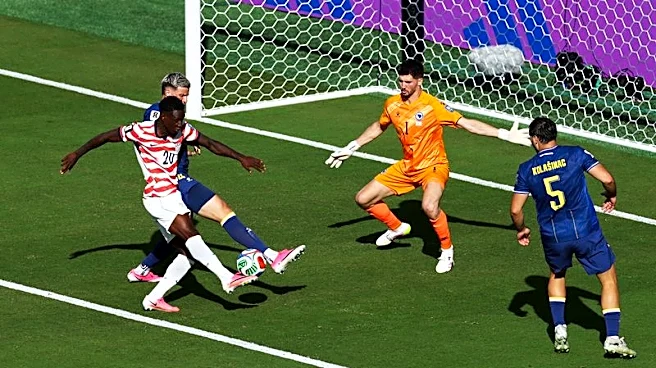
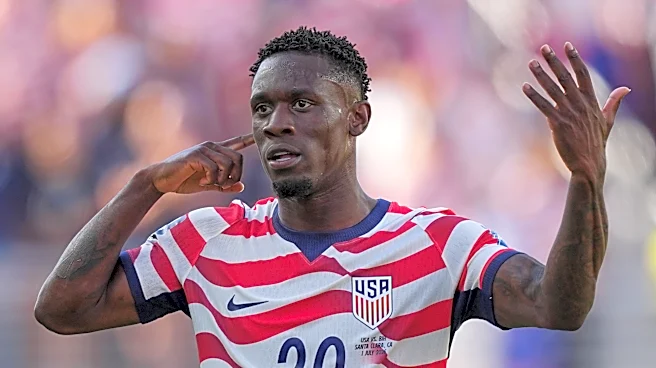
During the World Cup match between the United States and Bosnia-Herzegovina, US striker Folarin Balogun received a red card in the second half, which has sparked significant controversy. The decision, made after a video replay review by Brazilian referee
Raphael Claus, means Balogun will miss the upcoming match against Belgium. The red card was issued for a tackle deemed to be serious foul play, although US coach Mauricio Pochettino argued that the action was not intentional. The incident has reignited debates about the fairness of red card decisions, especially when compared to similar fouls by other players, such as Lionel Messi, who avoided punishment for a similar challenge earlier in the tournament.
Why It's Important?
The red card issued to Balogun is significant as it removes the US team's top scorer from their next match, potentially affecting their performance against Belgium. This decision has broader implications for the World Cup, highlighting ongoing concerns about the consistency and fairness of officiating, particularly with the use of Video Assisted Review (VAR). The controversy also raises questions about whether star players receive preferential treatment, as seen in the case of Messi's unpunished foul. The outcome of this decision could influence future discussions on the use of technology in sports officiating and the need for consistent application of rules.
What's Next?
With Balogun sidelined, the US team faces a challenging match against Belgium without their leading scorer. If the US wins, Balogun could return for the quarterfinals. However, the team must adapt their strategy to compensate for his absence. The incident may prompt FIFA to review its red card policies and the role of VAR in decision-making. Additionally, the debate over star player treatment could lead to calls for more transparency and consistency in officiating standards.
Beyond the Headlines
The controversy surrounding Balogun's red card highlights deeper issues within international soccer, such as the influence of technology on traditional refereeing and the potential bias towards high-profile players. This incident may contribute to ongoing discussions about the ethical implications of VAR and the need for reforms to ensure fair play. The situation also underscores the cultural significance of soccer as a global sport, where decisions can have far-reaching impacts on national pride and team dynamics.