



What's Happening?
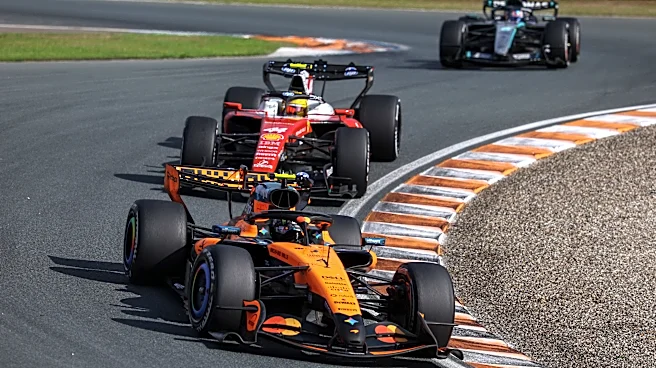
The FIA announced several post-race penalties following the Dutch Grand Prix. Among these, Liam Lawson and Franco Colapinto each received a 10-second penalty and one penalty point for failing to sufficiently reduce speed under a single yellow flag in turn
three. This action was deemed a breach of article B1.8.4a of the FIA F1 regulations. The stewards reviewed video, timing, telemetry, and in-car video evidence, concluding that both drivers passed a single yellow flag without discernibly reducing speed, despite receiving a visible warning on their dashboards. The infringement was not considered dangerous or egregious, leading to a penalty on the lower end of the available scale. For Colapinto, this was his second rules infraction at Zandvoort, as he had previously received a drive-through penalty and two penalty points earlier in the race for overtaking under a double yellow flag. As a result of these penalties, Lawson was classified in seventh place, and Colapinto in 14th.
Why It's Important?
These penalties highlight the FIA's strict enforcement of safety regulations, particularly concerning yellow flag infringements in Formula 1. The consistent application of penalties, even for incidents deemed 'not dangerous or egregious,' underscores the governing body's commitment to driver safety and fair competition. For drivers like Franco Colapinto, accumulating penalty points on their F1 superlicence can have significant long-term implications, potentially affecting their eligibility for future races or even their standing in the sport. While a single penalty point might seem minor, repeated infractions can lead to race bans. The transparency in the FIA's review process, utilizing multiple data sources like video, timing, and telemetry, reinforces the integrity of their decisions. This also serves as a crucial reminder to all competitors about the importance of adhering to trackside warnings and regulations, ensuring a safer racing environment for everyone involved.
What's Next?
Drivers will likely face continued scrutiny regarding adherence to yellow flag rules in upcoming races. The FIA's consistent enforcement sets a precedent that all competitors must heed, emphasizing the need for immediate and discernible speed reduction when yellow flags are displayed. Teams and drivers will undoubtedly review their procedures and driver coaching to ensure compliance, aiming to avoid similar penalties in the future. For Franco Colapinto, the accumulation of penalty points will require careful management to prevent reaching the threshold for a race ban. The FIA will continue to monitor race incidents closely, and any further breaches of safety regulations will likely result in similar or potentially more severe consequences, depending on the nature and severity of the infringement. This ongoing vigilance is crucial for maintaining safety standards across all Formula 1 events.
Beyond the Headlines
The FIA's rigorous enforcement of yellow flag rules extends beyond immediate race results, influencing the broader culture of safety in motorsport. The detailed review process, incorporating various data points, reflects a commitment to objective decision-making, which is vital for maintaining trust in the sport's governance. While drivers may express frustration, as Colapinto did, these regulations are fundamental to preventing serious accidents, especially in high-speed environments like Formula 1. The accumulation of penalty points also introduces a strategic element for drivers, as they must balance aggressive racing with the need to avoid infractions that could jeopardize their season. This system encourages a more disciplined approach to racing, fostering a safer competitive landscape and reinforcing the idea that safety protocols are non-negotiable, regardless of a driver's position or the race's intensity.