











What's Happening?
Dermatologists have provided insights into the differences between sunscreens formulated for children and those for adults. According to Dr. Neha Chandan, a double board-certified dermatologist, the primary distinction lies in the active ingredients.
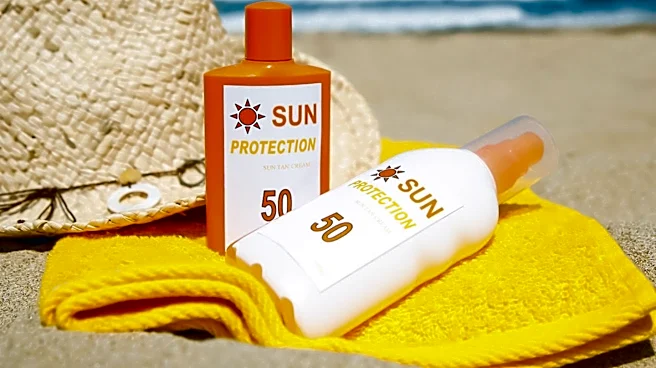
Adult sunscreens often use chemical filters like avobenzone and oxybenzone, which can irritate children's sensitive skin. In contrast, children's sunscreens typically use mineral blockers such as zinc oxide and titanium dioxide, which sit on the skin's surface and deflect UV rays without being absorbed. This makes them more suitable for young skin, which is more sensitive and absorbs chemicals more easily. The article also notes that while higher SPF numbers are available, an SPF of 30 to 50 is generally sufficient for both children and adults, as higher SPFs offer negligible additional protection and can be more difficult to apply.
Why It's Important?
Understanding the differences between kid and adult sunscreens is crucial for parents and caregivers to ensure the safety and effectiveness of sun protection for children. Using the appropriate sunscreen can prevent skin irritation and potential long-term skin damage in children. The emphasis on mineral sunscreens for kids highlights the need for products that are gentle on sensitive skin while providing adequate protection. This information is particularly relevant as it guides consumers in making informed choices about sun protection, potentially reducing the risk of skin cancer and other sun-related skin issues. The advice to use SPF 30 to 50 also simplifies the decision-making process for consumers, focusing on effective protection rather than marketing claims.