



What's Happening?
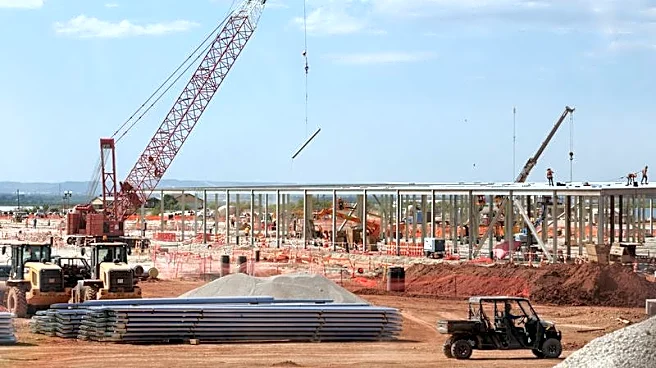
Thailand has suspended the construction of 49 data center projects due to growing public concerns over their impact on resources and communities. This decision was announced by Danucha Pichayanan, secretary-general of the National Economic and Social
Development Council, following the first meeting of the country’s data center supervision commission, led by Finance Minister Ekniti Nitithanprapas. The halt is intended to provide officials with time to develop new industry regulations, which are expected to be announced within a month. The move comes as Thailand has seen a significant surge in tech investment, with 88 projects related to AI and data centers, totaling 886 billion baht (US$27 billion), approved in the first half of the year. Concerns primarily revolve around the substantial power and water consumption of these facilities, as well as their potential environmental impact and safety issues, particularly in densely populated urban areas like Bangkok.
Why It's Important?
This suspension highlights a growing global challenge: balancing rapid technological advancement, particularly in AI and data infrastructure, with environmental sustainability and community well-being. For the U.S. tech industry, which includes major players like Microsoft and Amazon investing heavily in global data centers, this development in Thailand signals increasing regulatory scrutiny and potential delays in international expansion. The U.S. itself is experiencing similar backlashes, with at least 75 data center projects worth approximately US$130 billion blocked or delayed in the first three months of the year due to local opposition. This trend could lead to higher operational costs, longer development timelines, and a re-evaluation of investment strategies for U.S. companies seeking to establish or expand data center operations abroad. It also underscores the need for more comprehensive environmental impact assessments and community engagement in the planning of such large-scale infrastructure projects, both domestically and internationally.
What's Next?
Thai officials are expected to finalize new industry regulations for data centers within the next month. These regulations will likely address issues such as power and water consumption, environmental impact, safety standards, and location guidelines, especially for projects in urban areas. The government aims to establish uniform oversight for both operational and developing data centers to ensure sustainable growth. While the current decision does not signify a complete halt to data center investment, it indicates a shift towards more stringent approval processes. U.S. tech companies with existing or planned investments in Thailand will need to adapt to these new regulations, which may include higher electricity rates for large operators and more rigorous environmental reviews. The outcome of Thailand's regulatory review could also serve as a precedent for other nations grappling with similar challenges, potentially influencing global standards for data center development.
Beyond the Headlines
The situation in Thailand reflects a broader global reckoning with the environmental footprint of the digital economy. As AI and cloud computing demand continues to surge, the energy and water requirements of data centers are becoming a significant concern. This issue extends beyond mere resource consumption to encompass the broader societal impact, including noise pollution, heat generation, and the strain on local infrastructure. The regulatory gaps exposed in Bangkok, where data centers were often permitted as warehouses, highlight the need for updated legal frameworks that specifically address the unique characteristics and demands of these facilities. This global trend could accelerate the development of more energy-efficient data center technologies and push for greater reliance on renewable energy sources. It also emphasizes the importance of transparent governance and community involvement in infrastructure planning to prevent future conflicts and ensure equitable development, potentially leading to a more sustainable and socially responsible tech industry worldwide.