





What's Happening?
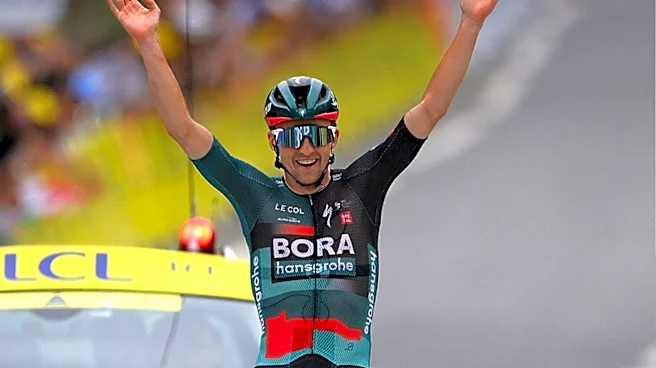
TNT Sports has reported a significant 58% increase in viewership for the Tour de France in the UK and Ireland, marking the first year of its exclusive broadcasting rights for the event. This development follows the decision by ITV to drop its free-to-air
coverage of the race after 25 years, leading Warner Bros. Discovery (WBD), TNT Sports' parent company, to secure an exclusivity deal. The race is now available behind a paywall, costing viewers £30.99 per month or £25.99 on a 12-month contract. Despite the lack of free-to-air live coverage, TNT Sports offered a free highlights show on Channel 5, which averaged 557,400 viewers per stage. The move to a paywall reflects a broader trend in sports broadcasting, where major events are increasingly placed behind subscription services.
Why It's Important?
The shift to a paywall model for the Tour de France in the UK and Ireland highlights a significant change in sports broadcasting, with potential implications for viewership and accessibility. While TNT Sports has seen a rise in viewership, the decision to move away from free-to-air coverage could limit access for audiences unwilling or unable to pay for subscriptions. This trend mirrors broader industry practices, as seen with other major sports like the Premier League. The increase in viewership suggests a market willing to pay for exclusive sports content, but it also raises questions about the long-term impact on audience diversity and engagement. The strategy could influence future broadcasting decisions for other major sporting events.
What's Next?
As TNT Sports continues its exclusive coverage of the Tour de France, it will be crucial to monitor how this paywall strategy affects long-term viewership trends and subscriber retention. The company may explore additional ways to enhance its offerings, such as improved digital streaming experiences or expanded highlights packages, to attract and retain subscribers. Additionally, other broadcasters may evaluate the success of TNT Sports' model to determine whether similar strategies could be applied to other sports events. The response from viewers, particularly those who previously relied on free-to-air coverage, will be a key factor in shaping future broadcasting approaches.