





What's Happening?
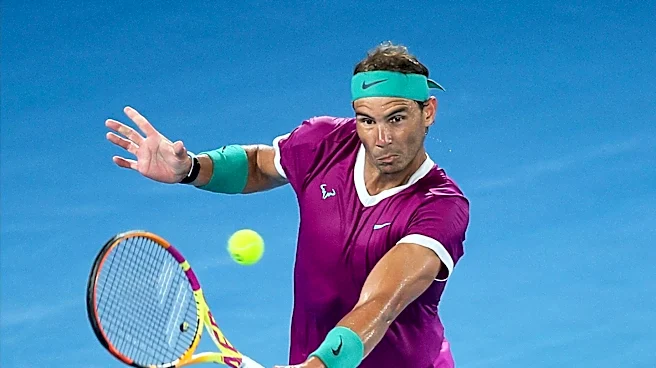
Rafael Nadal, a prominent figure in professional tennis, is advocating for substantial changes to the ATP Tour calendar, emphasizing the need for fewer hard courts and a more player-friendly schedule. Nadal argues that the current dominance of hard courts is detrimental
to players' long-term health, causing considerable stress on their bodies and joints. He proposes several key reforms, including a reduction in hard-court tournaments, the introduction of a two-year ranking system similar to golf, and a reconsideration of the extended Masters 1000 format. Additionally, Nadal suggests giving players more freedom to manage their schedules without facing disproportionate ranking penalties. These proposals aim to create a more sustainable and less physically demanding environment for professional tennis players.
Why It's Important?
Nadal's call for reform highlights a critical issue within professional tennis: the physical toll on athletes due to the demanding schedule and playing surfaces. His suggestions, if implemented, could significantly impact player longevity and career sustainability. A shift away from hard courts could reduce injuries, allowing top players to compete at a high level for longer periods, which would benefit the sport's overall appeal and competitive integrity. The proposed two-year ranking system could offer a safety net for injured players, preventing rapid drops in rankings and providing more time for recovery. This could lead to a more equitable and less stressful competitive landscape, potentially attracting more talent to the sport and ensuring a higher quality of play over time. The changes could also influence tournament organizers and sponsors to adapt to a new calendar structure.
What's Next?
The ATP Tour and its governing bodies will need to consider Nadal's proposals, which could spark extensive discussions among players, coaches, tournament directors, and medical professionals. Implementing such significant changes would require a consensus and a strategic plan to gradually transition to a new calendar and surface distribution. There could be resistance from tournaments heavily invested in hard-court events or those benefiting from the current Masters 1000 format. However, the backing of a highly respected player like Nadal could lend considerable weight to these arguments, potentially leading to pilot programs or phased introductions of some of his suggested reforms. The long-term health of the sport's athletes and its future appeal will likely be central to these ongoing conversations.
Beyond the Headlines
Nadal's advocacy extends beyond immediate calendar adjustments, touching upon the fundamental philosophy of professional sports regarding athlete welfare versus commercial interests. His comments underscore a broader debate about the balance between maximizing revenue through extensive tours and ensuring the well-being of the athletes who drive the sport's popularity. The discussion could prompt other sports to re-evaluate their own schedules and demands on athletes. Furthermore, a move towards more diverse playing surfaces could alter strategic aspects of the game, potentially favoring players with different skill sets and leading to more varied and exciting competitions. This initiative could set a precedent for athlete-led movements demanding greater consideration for health and career longevity in high-performance sports.