






What's Happening?
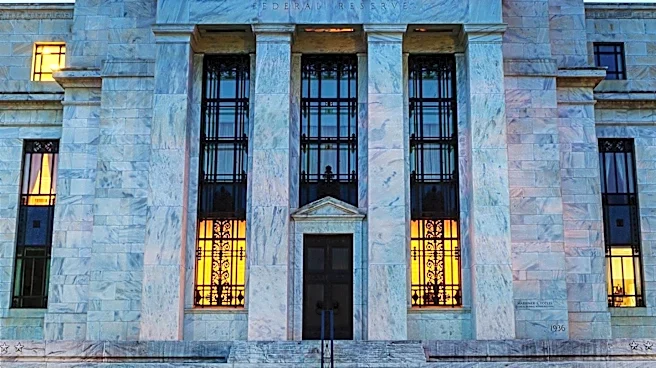
With the Digital Asset Market Clarity (CLARITY) Act stalled in the U.S. Senate, federal agencies including the SEC, CFTC, and Federal Reserve are accelerating their own crypto rulemaking. The SEC's Division of Corporation Finance has issued detailed guidance
on liquid staking activities and token buybacks, particularly focusing on Ethereum-based staking. This guidance clarifies that staking receipt tokens, which serve purely as 'receipts' for a digital commodity like ETH, are not treated as securities, provided they do not embed additional rights or rewards and adhere to strict conditions regarding non-reuse and non-rehypothecation of staked assets. The SEC also addressed token buybacks, stating that for functional networks, an issuer's announcement of a buyback program for a non-security token does not automatically constitute a promise of essential managerial efforts under the Howey test. This move by the agencies aims to provide regulatory clarity in the absence of comprehensive legislation.
Why It's Important?
This agency-led regulatory push is crucial for the U.S. crypto market, which has been grappling with significant uncertainty due to the lack of a clear legislative framework. The SEC's guidance, particularly regarding Ethereum staking and token buybacks, reduces a major cloud of uncertainty for liquid staking providers, DeFi protocols, and institutional staking services. By clarifying that pure staking receipt tokens for ETH are not securities, it effectively acknowledges ETH as a digital commodity in certain contexts, which could reduce regulatory tail risk and support more confident positioning in ETH and related DeFi assets. This distinction between 'building the network' and 'maintaining a functioning system' is critical for projects designing tokenomics and communication strategies, potentially encouraging more open discussion of protocol improvements. However, it also raises the bar for pre-launch or unfinished projects, which may face heightened scrutiny if their marketing or token structures resemble investment contracts.
What's Next?
The market will likely see shifts in how exchanges and staking platforms update their disclosures to align with the SEC’s conditions, particularly concerning the rights attached to staking receipt tokens and the use of customer assets. Projects with complex staking derivatives, yield-linked tokens, or aggressive buyback marketing tied to future returns may face new enforcement or rulemaking risks. Traders and SimFi users will need to differentiate between functional networks and early-stage token projects when assessing regulatory risk and scrutinize staking receipt tokens to ensure they are true 'receipts' without additional embedded rights or rehypothecation. The Fed’s involvement will continue to influence how banks engage with crypto, stablecoins, and tokenized assets, with tighter coordination between prudential regulation and market rules potentially scaling institutional capital into crypto-linked products. The ongoing evolution of agency guidance will be a key factor in shaping the crypto landscape.
Beyond the Headlines
The SEC's guidance, by distinguishing between functional networks and investment-style token projects, could accelerate a bifurcation in the crypto market, leading to different regulatory expectations for each. This approach emphasizes the importance of a token's utility and decentralization in determining its regulatory classification, moving away from a one-size-fits-all approach. The focus on non-reuse and non-rehypothecation of staked assets could enhance trust in large staking platforms by ensuring greater transparency and security for customer funds, while pressuring more opaque models. This development also highlights the increasing sophistication of regulatory bodies in understanding the nuances of blockchain technology and digital assets, moving beyond broad classifications to more granular assessments. The ethical implications of tokenomics and marketing strategies will also come under closer scrutiny, pushing projects towards greater transparency and adherence to established financial principles.