




What's Happening?
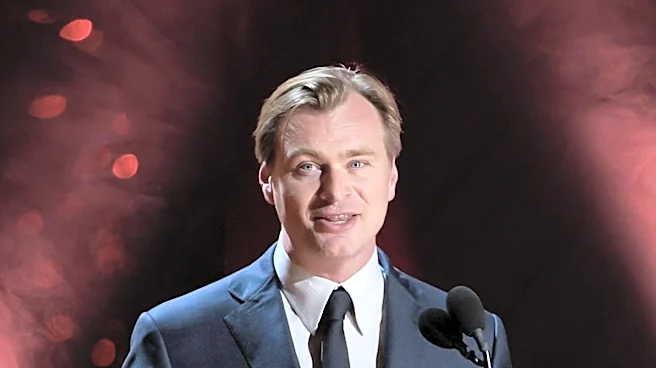
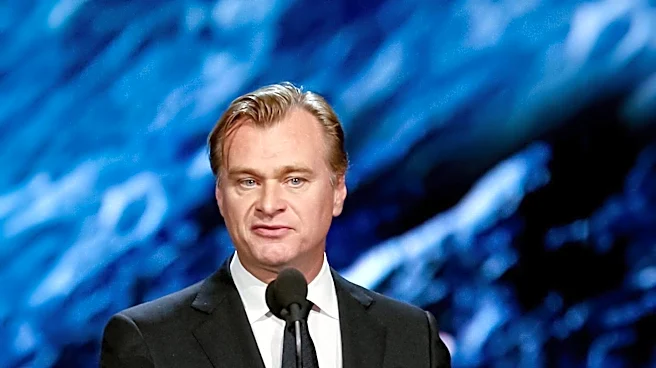
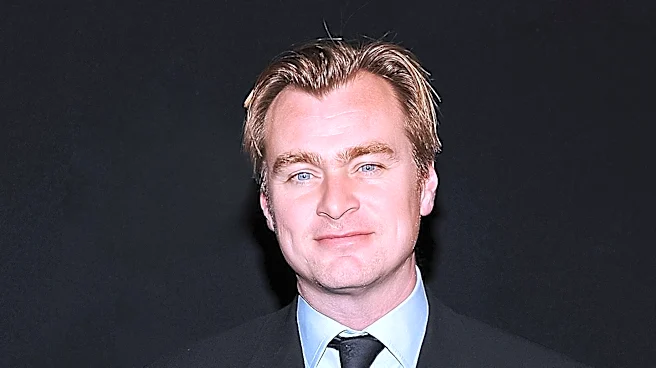
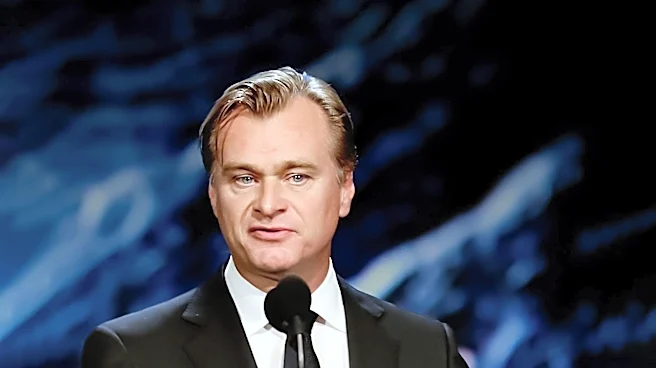
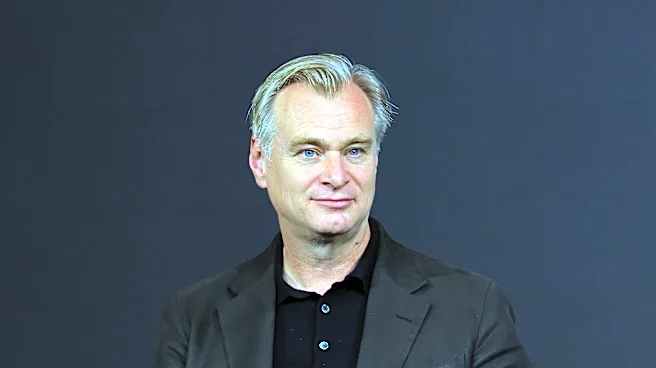
Filmmaker Christopher Nolan, known for his intricate narratives often involving time, has cultivated a significant collection of watches featured prominently in his movies. Despite not owning a smartphone or sending emails, Nolan's fascination with timepieces
extends to his cinematic work, where watches often play crucial roles in plot development and character portrayal. His films, including 'Interstellar,' 'Inception,' 'Tenet,' and 'Oppenheimer,' have showcased a variety of brands such as Hamilton, Jaeger-LeCoultre, TAG Heuer, and Omega. For 'The Odyssey,' released in July 2026, Hamilton collaborated with Nolan to create a bronze limited edition watch inspired by the film, marking the first time Nolan co-designed a timepiece. This collaboration highlights the deep integration of horology into Nolan's artistic vision, with specific watches often custom-designed or carefully selected to align with the film's themes and historical context. The attention to detail in watch selection has become a signature element of Nolan's filmmaking, influencing both narrative and visual aesthetics.
Why It's Important?
Nolan's meticulous integration of watches into his films elevates their significance beyond mere props, transforming them into integral storytelling devices. This approach not only enriches the cinematic experience but also highlights the cultural and historical importance of timepieces. For the watch industry, Nolan's films provide a unique platform, showcasing various brands and models to a global audience, potentially influencing trends and collector interest. The collaboration with Hamilton for 'The Odyssey,' where Nolan co-designed a watch, signifies a deeper engagement between a filmmaker and a brand, creating a collectible item directly tied to cinematic art. This trend could inspire other filmmakers and brands to explore similar partnerships, blurring the lines between product placement and artistic collaboration. Furthermore, the detailed attention to period-accurate watches, as seen in 'Oppenheimer,' underscores the role of horology in historical authenticity, adding another layer of depth for audiences and enthusiasts alike.
What's Next?
The success of Nolan's watch integrations and collaborations, particularly the co-designed Hamilton for 'The Odyssey,' may pave the way for future partnerships between filmmakers and watch manufacturers. This could lead to more film-inspired limited edition timepieces, further bridging the gap between cinema and luxury goods. As Nolan continues to produce films, it is anticipated that watches will remain a significant element, potentially evolving in their narrative function or design. The ongoing interest from watch enthusiasts and film critics in identifying and analyzing the timepieces in his movies suggests a sustained cultural impact. This trend could also encourage other directors to consider how such detailed elements can enhance their storytelling, potentially leading to a broader appreciation for horology within the film industry and among general audiences. The collectible nature of these film-associated watches is also likely to grow, creating a niche market for cinephiles and watch collectors.
Beyond the Headlines
Nolan's unique approach to incorporating watches into his films reflects a deeper philosophical engagement with the concept of time itself, a recurring motif in his work. By making watches central to his narratives, he subtly prompts audiences to consider the nature of time, its measurement, and its impact on human experience. This goes beyond simple product placement, transforming the watch into a symbol of fate, destiny, or critical junctures within the story. The fact that Nolan himself does not use modern communication tools like smartphones or email further underscores his deliberate relationship with time and technology, suggesting a preference for tangible, mechanical objects that embody precision and craftsmanship. This artistic choice highlights a broader cultural commentary on our relationship with technology and the enduring appeal of traditional instruments in an increasingly digital world, offering a unique perspective on how objects can carry profound meaning in storytelling.