





What's Happening?
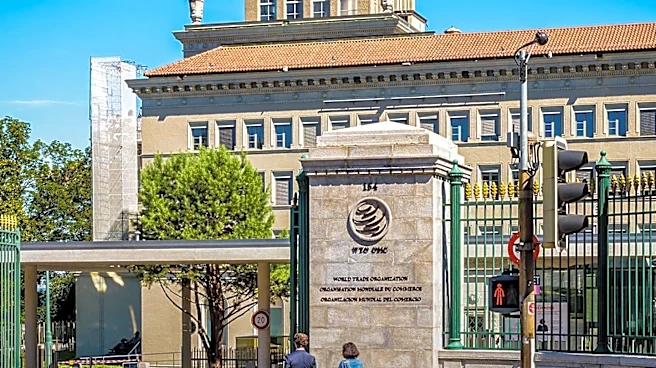
The World Trade Organization (WTO) has significantly upgraded its forecast for global merchandise trade growth in 2026, projecting a 3.9% increase, a substantial rise from the 1.9% growth anticipated in March. This revised outlook, detailed in the WTO's
latest 'Global Trade Outlook and Statistics,' suggests that international logistics services demand is accelerating despite ongoing global challenges. The WTO attributes this robust growth to supply chains successfully adapting to disruptions in energy and fertilizer markets, alongside a significant boost in trade of AI-enabling goods due to AI-related infrastructure investments. Growth is expected to be even faster in 2027, reaching 4.1%. Asia is projected to experience the strongest growth, with both import and export volumes increasing by 9.9% through 2026. Conversely, the Middle East has seen declines in both exports and imports. The report also notes the surprising resilience of products like fertilizers and energy cargoes, with trade volumes sustained by the ability to find alternative sources and freight transport services successfully establishing new routes.
Why It's Important?
This updated WTO forecast signals a more optimistic global economic landscape, particularly for industries reliant on international trade and logistics. The accelerated growth indicates a strong capacity for global supply chains to adapt and innovate in the face of geopolitical tensions and market volatility. For the U.S., this could translate into increased demand for American goods and services, especially in the technology sector, given the significant role of AI-related hardware in driving trade growth. The resilience of energy and fertilizer markets also suggests a more stable environment for agricultural and industrial sectors. However, the uneven growth across regions, with Asia leading and the Middle East declining, highlights potential shifts in global economic power and trade routes. U.S. businesses and policymakers will need to monitor these regional dynamics to capitalize on emerging opportunities and mitigate risks in evolving trade relationships.
What's Next?
Looking ahead, the WTO anticipates continued strong growth in AI-related electronic hardware trade, forecasting a 30% increase in volume through 2026 and a further 10-20% rise in AI capital expenditure in 2027. This suggests that the technology sector will remain a primary driver of global trade expansion. Logistics service providers are expected to continue adapting and innovating, further reinforcing the resilience of supply chains. While merchandise trade is projected to grow robustly, the WTO expects services, including tourism, to grow less rapidly at 3.3% in the near term, largely due to ongoing conflicts in the Middle East, though a strong 'bounce-back' for services is anticipated in 2027. Businesses should prepare for sustained demand in physical goods trade, particularly in tech, and monitor geopolitical developments that could impact service sector recovery.
Beyond the Headlines
The WTO's revised forecast underscores a deeper trend of technological advancement, particularly in artificial intelligence, becoming a central pillar of global economic growth and trade resilience. The ability of supply chains to 'adapt to disruptions' and find 'new routes' highlights a fundamental shift towards more agile and diversified global trade networks. This adaptability, driven by necessity, could lead to a more robust and less centralized global trading system in the long term. The emphasis on AI-enabling goods also points to an accelerating digital transformation of economies worldwide, potentially widening the gap between countries that can invest in and leverage AI infrastructure and those that cannot. This could reshape geopolitical alliances and economic dependencies, with implications for international cooperation and competition in the coming years.