







What's Happening?
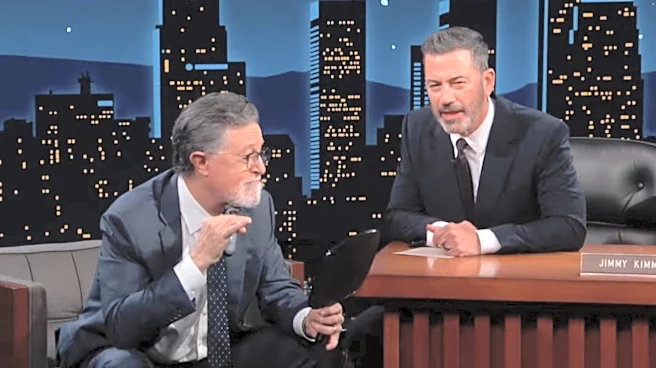
Jimmy Kimmel Live! saw a substantial increase in viewership for the week of September 6, averaging 2.171 million total viewers, marking a 59% rise from the previous week's repeat-heavy schedule. The show also experienced a 36% climb among adults aged
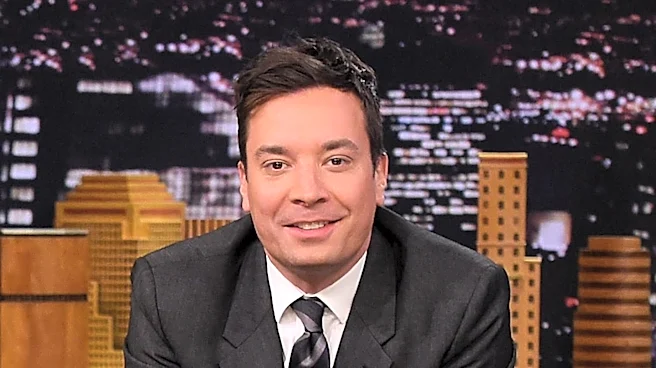
18-49, reaching 232,000 viewers, and led the 11:35 p.m. time slot in both metrics. This surge coincided with Jimmy Kimmel's return to the show on Tuesday after a two-month summer hiatus. His three original episodes each attracted over 2.5 million total viewers, with repeats airing on Monday and Friday. Other late-night programs also saw rebounds, including NBC’s The Tonight Show Starring Jimmy Fallon, which increased its total viewership by 18% to 1.311 million and its 18-49 demographic by 74% to 216,000. The Daily Show, returning with three first-run episodes, averaged 937,000 total viewers and 140,000 adults 18-49.
Why It's Important?
The significant rebound in ratings for Jimmy Kimmel Live! underscores the continued importance of host presence in late-night television and its direct impact on viewership. This trend highlights that despite the proliferation of streaming and on-demand content, live television, particularly with established personalities, can still draw substantial audiences. For ABC, the increased ratings translate to higher advertising revenue potential and a stronger competitive position in the late-night landscape. The performance of other shows like The Tonight Show and The Daily Show also indicates a broader resurgence in late-night viewership after a summer lull, suggesting that audiences are returning to traditional broadcast platforms for current events and entertainment. This data is crucial for network executives and advertisers in making strategic decisions regarding programming, talent contracts, and ad placements, as it demonstrates the enduring value of live, personality-driven content in a fragmented media environment.
What's Next?
Following this ratings boost, ABC will likely aim to maintain the momentum generated by Kimmel's return. This could involve continued investment in the show's content, guest bookings, and promotional efforts to capitalize on the renewed viewer interest. Other late-night shows will also be closely monitoring their own ratings and adjusting strategies to compete in this dynamic environment. The data from Nielsen, which tracks Live+3 ratings (including three days of DVR playback), will continue to be a key metric for assessing long-term trends and audience engagement. Networks may also explore how to leverage these live viewership numbers to drive engagement on digital platforms, recognizing that linear ratings represent only a portion of the total audience. The competitive landscape among late-night programs will remain intense, with each network striving to secure and grow its audience share.
Beyond the Headlines
The strong performance of Jimmy Kimmel Live! upon its host's return highlights a broader cultural phenomenon: the enduring appeal of familiar and trusted voices in media. In an era of rapid news cycles and diverse content options, audiences often gravitate towards personalities who offer a sense of stability and connection. This trend extends beyond late-night television, influencing news programs and other entertainment formats. The ability of a single host to significantly impact viewership underscores the power of individual branding and the parasocial relationships viewers form with on-screen talent. This also raises questions about the sustainability of late-night television in the long term, particularly as networks grapple with rising production costs and the need to attract younger demographics who increasingly consume content differently. The reliance on a central figure for ratings success could also pose challenges for succession planning and the longevity of these franchises.