








What's Happening?
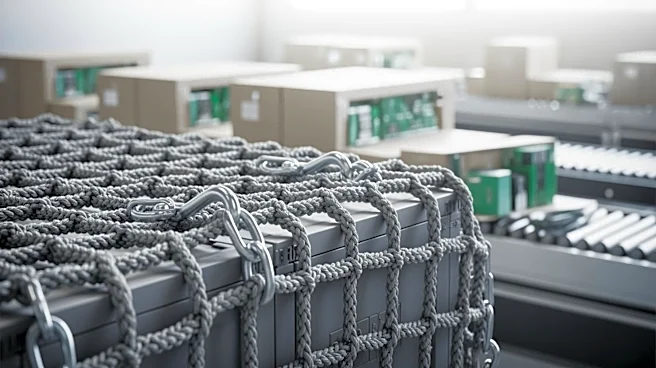
The global cargo securing netting market is projected to grow at a compound annual growth rate (CAGR) of 5.2% from 2026 to 2035, driven by the expansion of electronics logistics. The demand for high-strength, anti-static netting is increasing to protect
sensitive components during transport. The market is expected to reach an index value of 165 by 2035, with significant contributions from the electronics and semiconductor sectors. Import dependence remains high, with over 50-60% of consumption supplied by producers in China, India, and Southeast Asia. The integration of conductive yarns into cargo netting for electrostatic-sensitive electronics is gaining traction.
Why It's Important?
The growth of the cargo securing netting market is significant for the logistics and electronics industries, as it addresses the need for secure transport of sensitive components. The increasing complexity of global supply chains and the demand for anti-static netting highlight the importance of innovation in materials and logistics solutions. This growth is crucial for maintaining the integrity of high-value shipments and reducing damage during transport. The market's expansion also reflects broader trends in global trade and the rising importance of electronics in various sectors, including automotive and renewable energy.
What's Next?
The market is expected to see continued innovation in netting materials, with a focus on lighter, high-tenacity synthetic options that improve fuel efficiency. The integration of digital tracking and RFID technology into cargo netting is anticipated to enhance supply chain visibility and security. As demand for specialized netting grows, manufacturers will likely invest in expanding production capacities and developing new products to meet evolving industry standards. The market will also need to navigate challenges such as input cost volatility and certification complexities.