





What's Happening?
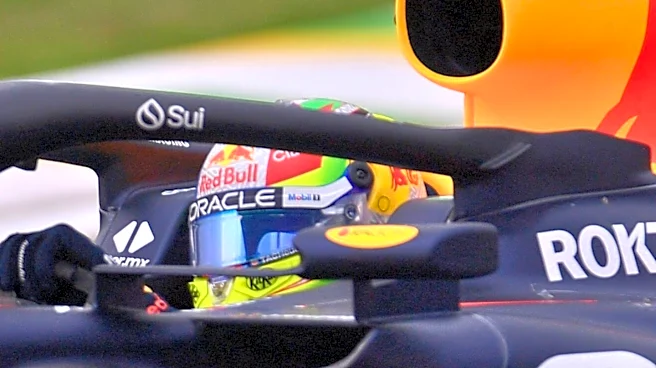
Sergio Perez, a Cadillac driver, has been issued a formal warning by the São Paulo Grand Prix stewards after he was observed throwing a small plastic piece from the cockpit of his car during the final practice session. The incident occurred on Saturday
at Interlagos. Perez's race engineer, Carlo Pasetti, questioned him about the object, to which Perez responded that it was a small box, possibly related to radio cables, that had come loose. The FIA summoned Perez for allegedly driving his car in an unsafe condition. Following an investigation, which included reviewing in-car video evidence and hearing from a team representative, the stewards determined the object was a cable organizer that typically attaches to the seatbelt. Perez stated he discarded it out of concern that it might lodge elsewhere in the car and create a safety issue. While acknowledging the object was small and unlikely to cause significant harm, the stewards deemed throwing materials onto the track during a live session inappropriate, leading to the formal warning issued to Cadillac.
Why It's Important?
This incident highlights the stringent safety protocols and regulations within Formula 1, even for seemingly minor occurrences. The formal warning, though not a grid penalty in this instance, underscores the FIA's commitment to maintaining a safe racing environment for all competitors and track personnel. Any object on the track, regardless of its size, poses a potential hazard, as it could be struck by another car, causing damage or even an accident. For Cadillac and other teams, this serves as a reminder to ensure all car components are securely fastened and to educate drivers on appropriate procedures for dealing with dislodged parts during live sessions. While Perez's intention was to prevent a larger safety issue within his own car, the method of disposal was deemed unacceptable, emphasizing that track integrity and safety are paramount. This event could lead to increased scrutiny on cockpit integrity and driver actions during races and practice sessions.
What's Next?
While Perez received a formal warning for this specific incident, he is already facing a significant grid penalty for the upcoming Sunday race. He is set to start from the back of the grid due to exceeding his engine component allocation for the F1 2026 season, having moved to a fifth internal combustion engine, fifth turbocharger, and fourth MGU-K. This 30-place grid drop automatically places him at the rear of the field. The formal warning for discarding the object does not add to this existing penalty. However, the incident may prompt further internal reviews by Cadillac regarding cockpit component security and driver protocols for handling unexpected equipment failures during high-speed sessions. The FIA may also use this incident as a case study to reinforce or clarify rules regarding debris on track.
Beyond the Headlines
The incident, though minor in its immediate consequence, touches upon the broader ethical considerations in competitive sports, particularly regarding safety and fair play. While Perez acted to mitigate a potential internal safety risk, the act of discarding an object onto a live track raises questions about the balance between individual driver safety and collective track safety. It also subtly highlights the intense pressure drivers face, where split-second decisions are made under extreme conditions. The stewards' decision to issue a formal warning rather than a more severe penalty suggests an understanding of the driver's intent while still upholding the principle that track integrity must be maintained. This event could contribute to ongoing discussions within Formula 1 about driver conduct, equipment design, and the continuous evolution of safety regulations to prevent even the smallest potential hazards.