






What's Happening?
New strategies for kitchen organization are being highlighted to help individuals maximize space, particularly in smaller kitchens. These methods focus on optimizing drawers, shelves, and vertical areas to transform cluttered spaces into functional ones.
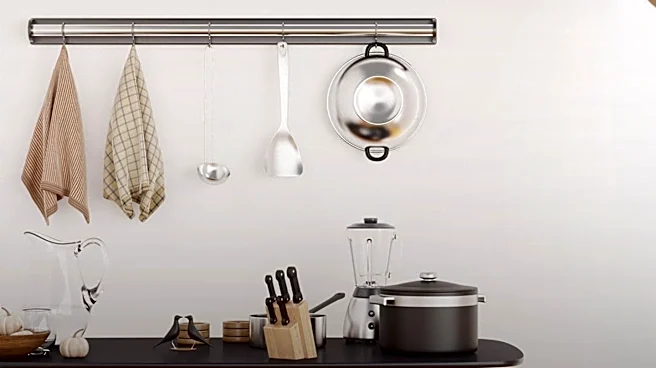
Key recommendations include using customizable drawer dividers to prevent stacking of platters and casserole dishes, thereby reclaiming drawer space. Building in storage blocks, such as a knife block within a narrow drawer, is suggested for safety and efficiency. Additionally, installing bracketed shelves in open areas provides practical storage for items like glassware without the bulk of traditional cabinets. Another innovative idea involves creating mini drawers on open shelves, ideal for storing spices and small measuring spoons. These approaches aim to reduce stress associated with kitchen clutter and improve overall functionality, making meal preparation and cleanup more efficient. The emphasis is on creative solutions that utilize every available inch, turning previously messy areas into organized and accessible storage.
Why It's Important?
These kitchen organization strategies are important for U.S. households, especially given the increasing trend of smaller living spaces in urban areas. Efficient organization directly impacts daily life by reducing stress and saving time during meal preparation and cleanup. For individuals and families in apartments or smaller homes, maximizing kitchen space is crucial for maintaining a functional and comfortable living environment. The adoption of these methods can lead to less food waste, as organized refrigerators make items more visible and accessible. Economically, investing in organizational tools like drawer dividers or shelving can be a cost-effective alternative to larger kitchen renovations, providing significant improvements without major expenses. Furthermore, a well-organized kitchen can enhance the aesthetic appeal of a home, contributing to overall well-being and potentially increasing property value in a competitive housing market. These practical solutions empower homeowners and renters to create more efficient and enjoyable living spaces.
What's Next?
The continued emphasis on small-space living and efficient home organization suggests that more innovative products and design solutions will emerge in the market. Consumers can expect to see a wider variety of customizable storage options, including modular shelving systems, specialized drawer inserts, and multi-functional kitchen tools designed to save space. Retailers and home improvement stores are likely to expand their offerings in this category, catering to the growing demand for practical and aesthetically pleasing organizational solutions. Design trends may further integrate these concepts, with new kitchen layouts incorporating built-in, space-saving features as standard. Additionally, there may be a rise in professional organizing services specializing in small spaces, offering tailored solutions to individuals struggling with clutter. Educational content, such as online tutorials and workshops, will likely continue to guide consumers on implementing these hacks effectively, fostering a culture of mindful and efficient home management.
Beyond the Headlines
Beyond the immediate benefits of a tidy kitchen, these organizational hacks reflect a broader cultural shift towards minimalism and mindful consumption in the U.S. The focus on maximizing existing space rather than acquiring larger homes or more possessions aligns with a desire for less clutter and a more sustainable lifestyle. Ethically, efficient organization can reduce waste by making it easier to track food inventory and use items before they expire. Legally, while not directly impacted, the demand for space-saving solutions could influence building codes and apartment designs to incorporate more flexible and efficient storage options. Culturally, the emphasis on a well-ordered home can contribute to a sense of calm and control in an increasingly fast-paced world. This trend also highlights a growing appreciation for thoughtful design and functionality, where every item has a designated place and purpose, fostering a more intentional approach to living.