








What's Happening?
Chaves County commissioners have postponed a vote on resolutions that would initiate the process for issuing two Industrial Revenue Bonds (IRBs) totaling up to $86 million for NextEra Energy Resources LLC. The bonds are intended to finance the construction
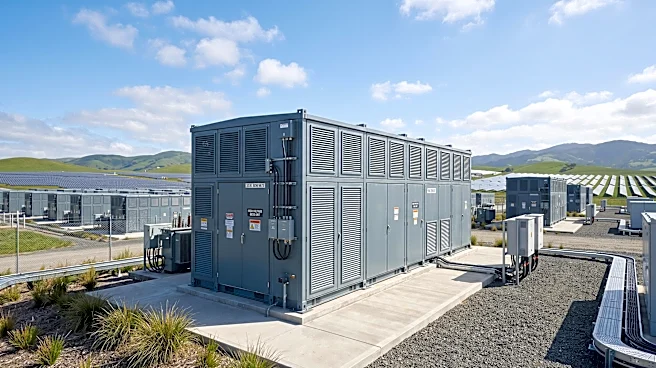
of a 15-acre battery energy storage facility at 445 Wrangler Road and 70 Outlaw Trail. The resolutions, R26-051 and R26-052, were put on hold during an October 15 county commission meeting after a motion to vote did not receive a second. These battery facilities are designed to complement two existing solar energy plants in the area, which have been operating for a decade across 1,400 acres and power over 40,000 homes. County Manager Bill Williams explained that the resolutions serve as an 'inducement' for businesses to continue negotiations, with NextEra being financially responsible for the bonds.
Why It's Important?
The postponement of the IRB vote highlights a growing scrutiny by local governments over tax abatements and incentives offered to large corporations, even those in the renewable energy sector. Commissioner Herbert Corn questioned the necessity of the bonds, citing NextEra's substantial financial standing, including its CEO's high compensation and the company's total equity of $163.3 billion. Commissioner Cliff Waide expressed concerns that the bonds primarily serve as a tax abatement for NextEra, questioning the direct economic benefit to the community. This situation underscores a broader debate about whether such incentives are truly beneficial for local taxpayers or if they disproportionately favor wealthy corporations, potentially impacting local school districts and other public services that rely on property tax revenue. The commissioners' hesitation reflects a desire for more tangible community benefits beyond just the presence of a new facility.
What's Next?
The resolutions are currently on hold, meaning the process to issue the IRBs for NextEra Energy Resources' battery storage facility has been paused. While the resolutions are intended to induce further negotiation, the commissioners' reluctance indicates a need for NextEra to demonstrate more direct and substantial community benefits. NextEra's associate project manager, Kayla Di Donado, acknowledged the need to show greater economic benefit to the community, indicating the company is working on a community benefits agreement. The county attorney, Martin Riggs, clarified that the IRBs would abate NextEra's taxes for 20 years on the property. The future of the project in Chaves County will likely depend on NextEra's ability to address the commissioners' concerns regarding local economic impact and tax abatement, potentially requiring a revised proposal that offers more direct advantages to the county and its residents.
Beyond the Headlines
This case in Chaves County is indicative of a national trend where local governments are increasingly evaluating the true cost and benefit of economic development incentives. While renewable energy projects are generally viewed favorably, the financial structures, particularly tax abatements, are coming under closer examination. The commissioners' stance could influence how other counties approach similar proposals from large energy companies, pushing for more robust community benefits agreements and greater transparency in financial arrangements. It also highlights the tension between attracting investment for green energy initiatives and ensuring equitable tax contributions for local public services. This situation could lead to a re-evaluation of standard incentive packages, potentially fostering a new era of more community-centric negotiations in economic development.