







What's Happening?
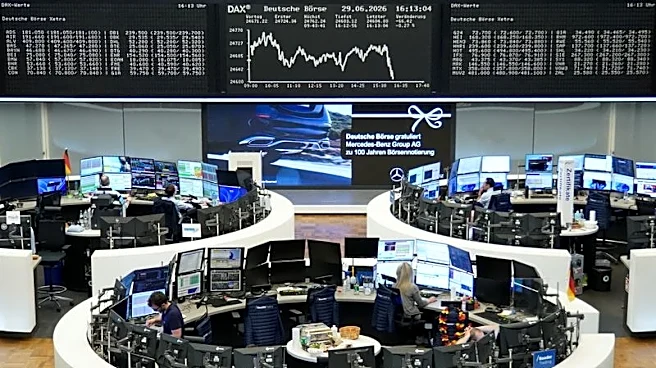
European equities are experiencing a positive shift due to a significant drop in crude oil prices following a ceasefire between the U.S. and Iran. This decrease in energy costs is alleviating inflation pressures and boosting corporate margins, particularly
benefiting sectors such as industrials, chemicals, travel, banks, and luxury goods. The STOXX 600 index has reached record levels, indicating a favorable investment environment in Europe. Despite these developments, U.S. markets continue to attract more capital, with U.S. ETFs drawing in $56 billion compared to Europe's $1.5 billion. Analysts suggest that while lower oil prices strengthen Europe's investment case, the U.S. remains dominant due to its AI-driven earnings growth.
Why It's Important?
The decline in oil prices is crucial for Europe as it eases inflation and supports economic growth. However, the U.S. market's continued dominance, driven by technology and AI advancements, highlights the persistent performance gap between the two regions. U.S. equities are projected to grow significantly, with S&P 500 earnings expected to increase by 24.5% in 2026. This growth underscores the structural advantages of U.S. markets, which continue to attract more investor capital. The situation reflects broader economic dynamics where Europe benefits from lower energy costs but struggles to match the U.S.'s technological and economic resilience.
What's Next?
While Europe may see short-term benefits from lower oil prices, a durable reallocation of investments from the U.S. to Europe is unlikely without significant structural changes. Investors are waiting for clearer evidence of economic activity and fiscal support translating into growth. The U.S. is expected to maintain its lead due to its robust earnings growth and technological advancements. European markets may need to address structural challenges, such as weak demand and competition from China, to attract more sustained investment.
Beyond the Headlines
The geopolitical landscape, including the U.S.-Iran ceasefire, plays a significant role in shaping global economic trends. The energy sector's influence on inflation and corporate margins highlights the interconnectedness of geopolitical events and market dynamics. Additionally, the focus on AI-driven growth in the U.S. suggests a long-term shift towards technology as a key economic driver, potentially influencing global investment strategies.