







What's Happening?
Ashley Lyle and Bart Nickerson, the creators of the Showtime series 'Yellowjackets,' have decided to conclude the show with its fourth season, rather than the originally planned five seasons. Nickerson informed Deadline that the narrative progressed faster
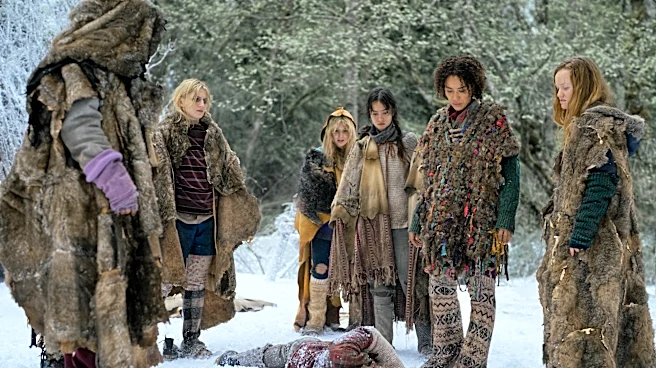
than anticipated, leading them to condense the remaining story elements into the fourth season. He noted that the show's dual timelines—following a New Jersey soccer team after a 1996 plane crash and their adult survivors—allowed for an efficient storytelling pace. Lyle added that the long-planned return of the stranded characters to civilization, a key plot point for the final season, reinvigorated the writing team. The creators emphasized that their initial five-season pitch was flexible, with the understanding that 'the show would tell us when it wanted to end.'
Why It's Important?
This decision by the 'Yellowjackets' creators reflects a growing trend in television production where narrative integrity and pacing are prioritized over extending a series for a predetermined number of seasons. By concluding the story in four seasons, the creators aim to maintain the show's quality and avoid narrative bloat, a common criticism of long-running series. This approach can enhance the overall viewer experience by delivering a more concise and impactful story arc. For the entertainment industry, it highlights a shift towards creator-driven decisions regarding series longevity, potentially influencing how networks and streaming platforms approach show development and renewal strategies. It also demonstrates a commitment to artistic vision, which can resonate positively with both critics and audiences.
What's Next?
The fourth season of 'Yellowjackets' will now serve as the series finale, bringing the dual storylines to their conclusion. Viewers can expect the stranded characters to return to civilization, a pivotal event that will force them to confront their past and maintain their secrets. The creative team will focus on delivering a satisfying resolution to the complex mysteries and character arcs established throughout the series. The decision to end the show earlier than initially planned may lead to a more tightly woven narrative, potentially increasing anticipation for the final episodes. The success of this condensed ending could also influence future showrunners to prioritize story efficiency over extended runs.
Beyond the Headlines
The choice to end 'Yellowjackets' after four seasons, despite an initial five-season plan, speaks to the evolving landscape of television storytelling. In an era of peak TV, creators are increasingly empowered to dictate the lifespan of their narratives, moving away from the traditional model of extending successful shows indefinitely. This shift can lead to more impactful and memorable series, as stories are allowed to conclude organically rather than being stretched thin. It also underscores the importance of creative control and the recognition that not every successful show needs to run for many years. This approach could set a precedent for other creators to prioritize narrative quality and a definitive ending, potentially leading to a higher standard of storytelling across the industry.