





What's Happening?
An unusual conspiracy theory is rapidly circulating on social media in Brazil, alleging that Real Madrid's Brazilian star, Vinicius Junior, has disappeared and been replaced by a lookalike. This claim, which is entirely unsupported by evidence, gained
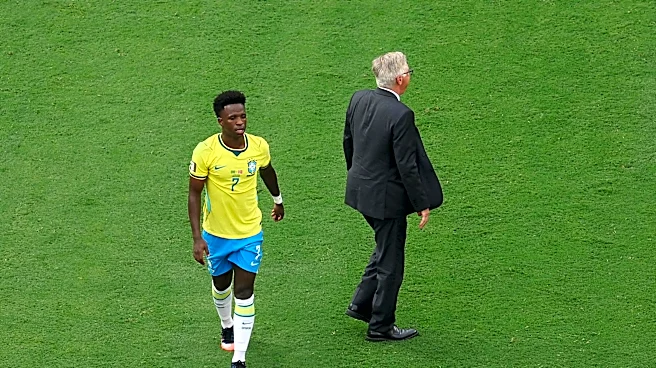
traction primarily in September through online forums and TikTok videos, according to Marca. Supporters of the theory point to observed changes in his appearance, particularly focusing on his tattoos. More outlandish versions of the theory suggest the footballer was killed after the World Cup and replaced to fulfill contracts, even implicating the CIA, the Rothschild family, and 'elites.' Some users have also linked these appearance changes to a previous conspiracy theory involving a 'reptilian alien invasion' during a World Cup, where Vinicius and Neymar were supposedly abducted. Despite these widespread claims, Vinicius's circle and Real Madrid have not acknowledged them as factually based allegations, and he continues to play for both Real Madrid and the Brazilian national team. No credible evidence supports any of these theories.
Why It's Important?
This phenomenon highlights the significant impact of social media in propagating unsubstantiated claims and conspiracy theories, even concerning high-profile public figures. For athletes like Vinicius Junior, such theories can create unnecessary distractions and potentially affect their public image, despite being baseless. The rapid spread of these narratives underscores a broader societal challenge in distinguishing factual information from misinformation, particularly in the digital age. It also demonstrates how easily minor changes in a public figure's appearance can be misinterpreted and amplified into elaborate, unfounded stories. The involvement of elements like the CIA and 'elites' in some versions of the theory reflects a common pattern in conspiracy theories, where complex, powerful entities are often blamed for perceived anomalies. This situation serves as a case study for how online platforms can be used to generate and disseminate content that, while entertaining to some, can be detrimental to the individuals involved and contribute to a culture of distrust in mainstream information sources.
What's Next?
Given the lack of credible evidence, it is highly probable that Vinicius Junior and Real Madrid will continue to disregard these conspiracy theories. The focus for the footballer will remain on his performance on the field for both his club and the national team. Social media platforms may face ongoing challenges in moderating the spread of such content, as these theories often evolve and adapt to new information or events. The incident could prompt further discussions within the sports and media industries about how to address and counter the proliferation of misinformation surrounding public figures. While the immediate impact on Vinicius's career is likely minimal due to the absurdity of the claims, the broader trend of online conspiracy theories will continue to be a subject of concern for public figures and media organizations alike.
Beyond the Headlines
The emergence of such a detailed and widespread conspiracy theory about a prominent athlete like Vinicius Junior reveals deeper societal anxieties and a growing skepticism towards established narratives. The focus on physical changes, such as tattoos, as 'evidence' for replacement, reflects a human tendency to seek patterns and explanations, even when none exist. The inclusion of elements like 'alien invasion' and secret organizations like the CIA and Rothschild family taps into existing cultural tropes of hidden powers and extraterrestrial influence, which resonate with certain segments of the online population. This incident underscores the psychological and sociological underpinnings of conspiracy theories, where individuals may find a sense of community or understanding in shared alternative explanations, especially in an increasingly complex and uncertain world. It also highlights the blurred lines between entertainment, satire, and genuine belief in the digital sphere, making it challenging to discern the true intent behind the propagation of such stories.