


What's Happening?
Norsland Lefse, a company based in Rushford, Minnesota, is gearing up for its busiest time of the year as the holiday season approaches. The company specializes in Norwegian flatbread, known as lefse, and other Scandinavian treats like Uffda Bites (lefse
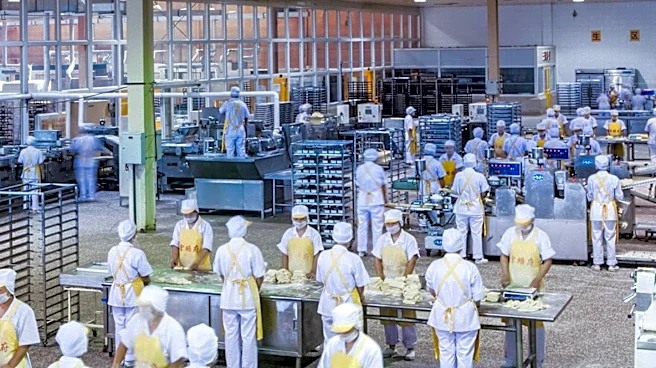
chips) and kringla (coffee cake). Owner Lori McDonald, who acquired the business a couple of years ago, highlights the strong demand, particularly during the holidays, when these products are often consumed with family. General manager Zach Lind oversees the kitchen operations, where machines run non-stop to produce approximately 2,000 pieces of lefse per eight-hour shift. The company prides itself on making its dough from scratch using potatoes, maintaining a tradition that dates back to 1983 when Merlin Hoiness started the business from his home.
Why It's Important?
Norsland Lefse's holiday rush exemplifies the significant role that cultural traditions and specialty foods play in the U.S. economy, particularly for small businesses in rural areas. For many Americans, especially those with Scandinavian heritage, lefse is an integral part of holiday celebrations, driving seasonal demand for companies like Norsland Lefse. This business supports local employment in Rushford, Minnesota, and contributes to the local economy. Furthermore, its success highlights the enduring market for authentic, traditional food products that evoke nostalgia and cultural connection. The ability of such niche businesses to thrive, especially during peak seasons, demonstrates the diversity and resilience of the U.S. food industry beyond large-scale corporations, catering to specific consumer preferences and cultural practices.
What's Next?
As the holiday season progresses, Norsland Lefse will continue its intensive production schedule to meet the high demand for its products. The company is open Monday through Friday, and its Scandinavian goods are also available online, allowing it to reach customers beyond its local Minnesota base. The focus will remain on maintaining the quality and traditional taste that customers associate with homemade lefse. After the holiday peak, the company will likely assess its seasonal performance and prepare for future production cycles, potentially exploring ways to expand its reach or introduce new seasonal offerings while staying true to its heritage. The ongoing challenge will be to balance increased production with maintaining the artisanal quality that defines its brand.
Beyond the Headlines
The story of Norsland Lefse goes beyond just a seasonal business boom; it speaks to the preservation of cultural heritage through food. In an increasingly globalized and homogenized food landscape, businesses like Norsland Lefse play a crucial role in keeping specific culinary traditions alive. For many families, the taste of lefse is deeply intertwined with memories and identity, making it more than just a food item but a cultural artifact. This phenomenon is not unique to Scandinavian foods but extends to various ethnic and regional specialties across the U.S., highlighting the importance of food as a carrier of cultural memory and community bonds. The success of Norsland Lefse underscores a consumer desire for authenticity and connection to heritage, suggesting a broader market trend that values traditional craftsmanship and cultural significance in food choices.