





What's Happening?
Stellantis CEO Antonio Filosa recently stated that while the U.S. market will eventually embrace electric vehicles, the pace of adoption is slower compared to other regions. Filosa noted that the share of new auto sales that are electrics in the U.S. remains
at approximately 7% this year, a figure similar to five years ago. He attributed this stagnation to a 'bubble driven by regulation' that deflated when the administration deregulated, leading consumers to prefer other powertrains. Filosa highlighted that markets in Asia, Europe, and South America are experiencing faster EV adoption due to a greater variety of EV models, more government support, increased consumer awareness, and fewer barriers at the dealership level. Despite the current slow pace, Filosa expressed his belief that the U.S. EV market will eventually boom, albeit with a lower magnitude and speed of transition than other global markets. He also observed a trend towards regionalization in the automobile market.
Why It's Important?
The cautious stance from a major automaker like Stellantis regarding U.S. EV adoption signals potential challenges for the country's transition to electric vehicles. If large manufacturers perceive a slower demand or face significant hurdles, it could impact their investment strategies, product offerings, and marketing efforts in the U.S. This perspective suggests that the U.S. market may lag behind other global regions in EV penetration, potentially affecting national climate goals and the competitiveness of its automotive industry. The CEO's comments also highlight the ongoing debate about consumer readiness for EVs in the U.S. versus the availability of diverse options and supportive infrastructure. A slower transition could mean prolonged reliance on internal combustion engine vehicles, with implications for fuel consumption, emissions, and energy independence. Furthermore, the mention of market regionalization could influence global supply chains and trade policies in the automotive sector.
What's Next?
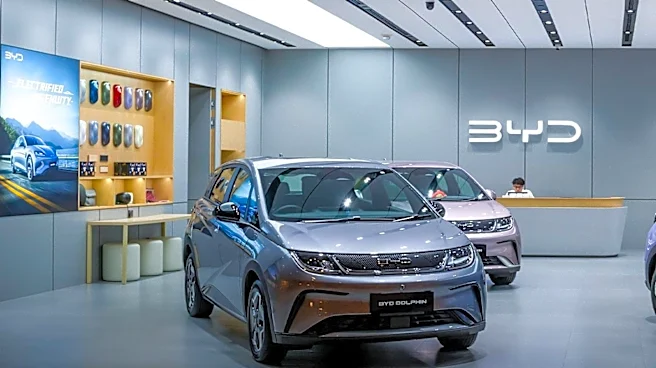
The future of EV adoption in the U.S. will likely depend on several factors, including potential shifts in government incentives and regulations, increased availability of diverse and affordable EV models, and improvements in charging infrastructure. Automakers like Stellantis may continue to adapt their U.S. strategies based on evolving consumer demand and policy landscapes. If the U.S. market continues to lag, there could be renewed calls for government intervention through incentives or infrastructure investments to accelerate the transition. Conversely, if consumer preferences remain tilted towards traditional powertrains, manufacturers might prioritize hybrid or more efficient gasoline vehicles in the short term. The ongoing debate about tariffs on imported EVs, particularly from highly competitive companies like BYD, could also play a significant role in shaping the U.S. EV market by influencing the variety and pricing of available electric vehicles.
Beyond the Headlines
The discussion around U.S. EV adoption extends beyond mere sales figures, touching upon deeper economic and societal implications. The perceived lack of consumer enthusiasm for EVs in the U.S., as suggested by Filosa, could stem from a combination of factors including range anxiety, charging infrastructure concerns, higher upfront costs, and a strong cultural attachment to traditional gasoline-powered vehicles. This contrasts with markets where government policies have aggressively pushed EV adoption, creating a different consumer mindset. The 'regionalization' of the auto market could also lead to divergent technological pathways and regulatory frameworks across different continents, potentially complicating global automotive standards and trade. Moreover, the narrative around EV adoption in the U.S. often becomes politicized, with differing views on the role of government in shaping consumer choices and industrial transitions. The long-term success of EVs in the U.S. will require not just technological advancements but also a significant shift in consumer perception and a robust, accessible charging ecosystem.