





What's Happening?
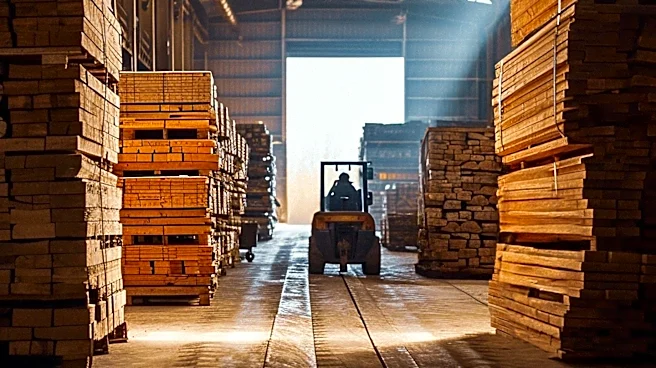
Roseburg Forest Products Co. has been identified as a significant entity within the growing wood-based products market. The market is experiencing increased demand driven by advancements in construction, evolving regulatory landscapes, and technological
innovations. Engineered wood products, such as cross-laminated timber and glulam, are increasingly being utilized in mid-rise and mass timber construction projects due to their favorable strength-to-weight ratio and efficiency in prefabrication. Economic factors, including the volatility of steel and concrete prices, are making wood a more attractive and cost-effective alternative in construction. Furthermore, stringent carbon-emission regulations, particularly in Europe and North America, are incentivizing the use of wood for its carbon-sequestration properties. The industry is also seeing a shift towards performance-based digital procurement, where tools like building information modeling (BIM) and life-cycle assessment software are used to optimize structural designs and environmental footprints, transforming wood into a highly engineered, data-driven component.
Why It's Important?
The prominence of companies like Roseburg Forest Products in the wood-based products market signifies a broader shift in the construction and manufacturing sectors. The increased adoption of engineered wood products reflects a growing emphasis on sustainable building practices and cost-efficiency. This trend has significant implications for U.S. industries, as it can lead to increased demand for timberland management and wood processing, potentially boosting employment and economic activity in regions with strong forestry sectors. The regulatory push for lower carbon emissions also positions wood products as a key component in achieving environmental goals, influencing public policy related to construction materials and sustainable development. Stakeholders in traditional construction materials like steel and concrete may face increased competition, while those in the wood products industry stand to gain from this evolving market landscape, driven by both economic and environmental considerations.
What's Next?
The wood-based products market is expected to continue its growth trajectory, with further integration of technology and sustainability metrics. Future developments will likely include continued innovation in engineered wood products, leading to new applications and enhanced performance characteristics. The emphasis on digital procurement and advanced modeling software will become more widespread, requiring companies like Roseburg Forest Products to adapt their manufacturing and supply chain processes to meet these technological demands. Regulatory frameworks, particularly those focused on carbon emissions and sustainable building, are anticipated to become even more influential, potentially driving further adoption of wood-based materials. This could lead to increased investment in research and development within the sector, focusing on improving wood product durability, fire resistance, and overall environmental footprint. Collaboration between wood product manufacturers, architects, and construction firms will be crucial in driving these innovations and expanding market reach.
Beyond the Headlines
The rise of wood-based products, with companies like Roseburg Forest Products at the forefront, points to deeper shifts in how societies approach construction and resource management. Beyond the immediate economic benefits, this trend highlights a growing societal value placed on sustainability and environmental responsibility. The increased use of wood, a renewable resource, in construction can contribute to reducing the carbon footprint of the built environment, offering a tangible solution to climate change concerns. This also brings ethical considerations regarding sustainable forestry practices and ensuring that increased demand does not lead to deforestation or unsustainable logging. Legally, there may be a need for updated building codes and standards to accommodate new engineered wood products and construction techniques. Culturally, there could be a resurgence of appreciation for wood as a primary building material, moving away from a sole reliance on more energy-intensive alternatives, fostering a more harmonious relationship between human development and natural resources.