







What's Happening?
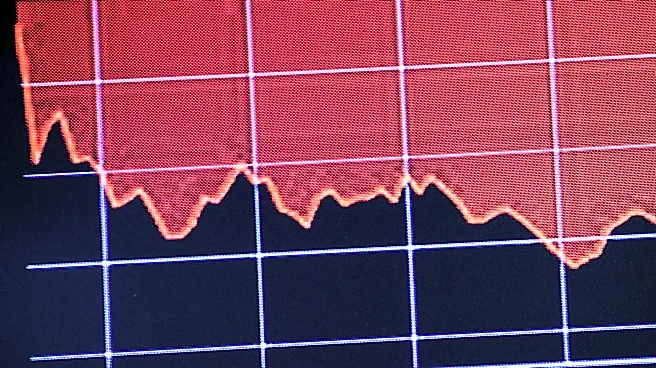
Cameco Corporation's stock (CCJ) experienced a 5.6% decline on Friday, November 20, 2026, closing at $58.00, its lowest point in the past year. This drop occurred on a day when the S&P 500 also fell by 3.7%, driven by a deepening sell-off in AI-related
technology stocks. Despite being a uranium producer, Cameco's stock movement was influenced by broader market sentiment regarding AI, as the company's management had previously indicated that AI and data centers represent a 'meaningful upside' for its business across uranium, fuel services, reactor services, and new reactor builds. However, management also clarified that its core strategy does not rely on these factors, grounding its base case in existing reactors, contracts, and fuel needs. The decline was not isolated to Cameco, as other uranium peers like Uranium Energy, Energy Fuels, NexGen Energy, Denison Mines, and Centrus Energy also saw larger drops. The wider energy sector, represented by the XLE fund, only slipped 0.6%, indicating that Cameco's decline was more aligned with its uranium peers and the tech sell-off rather than the broader energy market.
Why It's Important?
The significant drop in Cameco's stock, reaching a one-year low, highlights the market's current volatility and the interconnectedness of various sectors, even those seemingly disparate like uranium production and artificial intelligence. While Cameco's direct business is in uranium, investor sentiment around future growth drivers, such as the potential energy demands from AI and data centers, can heavily influence its valuation. The skepticism surrounding the execution of AI's impact on energy demand, as noted by Cameco's management, suggests that investors are becoming more cautious about speculative growth narratives. This trend could impact other companies that have loosely tied their future prospects to emerging technologies without concrete, short-term execution plans. The broader tech sell-off, which affected Cameco, indicates a potential shift in investor appetite from high-growth, speculative assets to more stable investments, or a re-evaluation of current valuations in the tech sector. For the energy sector, particularly nuclear, this situation underscores the challenge of balancing long-term growth opportunities with immediate market realities and investor expectations.
What's Next?
Cameco is scheduled to report its fourth-quarter 2026 results in February 2027. This upcoming report will provide crucial insights into the company's uranium deliveries for the year, which management had guided to be between 29.5 million and 30.5 million pounds. The market will closely scrutinize these figures to assess the company's operational performance and its ability to meet its own projections, especially in light of the recent stock decline. Furthermore, any updates from Cameco's management regarding the tangible impact or revised outlook on AI and data centers on their business could influence investor confidence. If the company provides more concrete plans or revised expectations regarding these growth drivers, it could either alleviate or exacerbate current market doubts. The broader market's sentiment towards AI and technology stocks will also continue to play a role, as a continued sell-off could further pressure Cameco's stock, regardless of its core business performance. Investors will be looking for signs of stabilization in the tech sector and clearer signals on the long-term energy demands driven by AI.
Beyond the Headlines
The situation with Cameco reflects a broader market dynamic where companies, even those in traditional industries, are increasingly being evaluated through the lens of emerging technological trends like AI. While Cameco's core business remains uranium production, its stock performance is now partially tethered to the speculative enthusiasm and subsequent skepticism surrounding AI's energy demands. This highlights a potential risk for companies that articulate future growth based on nascent technologies without clear, immediate pathways to realization. It also raises questions about market efficiency and whether short-term speculative trends can unduly influence the valuation of companies with long-term, fundamental value propositions. The market's reaction suggests a growing demand for tangible execution and less tolerance for purely aspirational growth narratives, especially in a volatile economic climate. This could lead to a re-evaluation of how companies communicate their long-term strategies and how investors assess the credibility of future growth drivers tied to rapidly evolving technological landscapes.