




What's Happening?
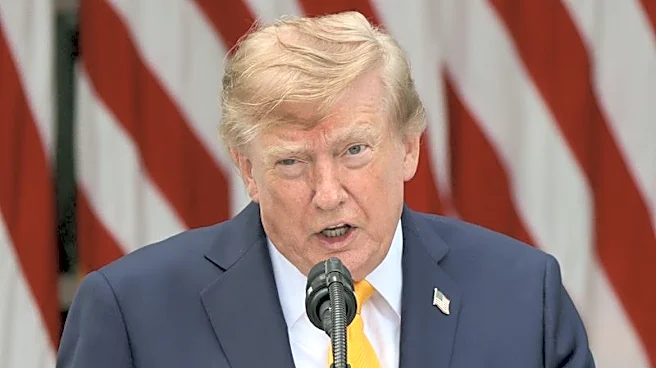
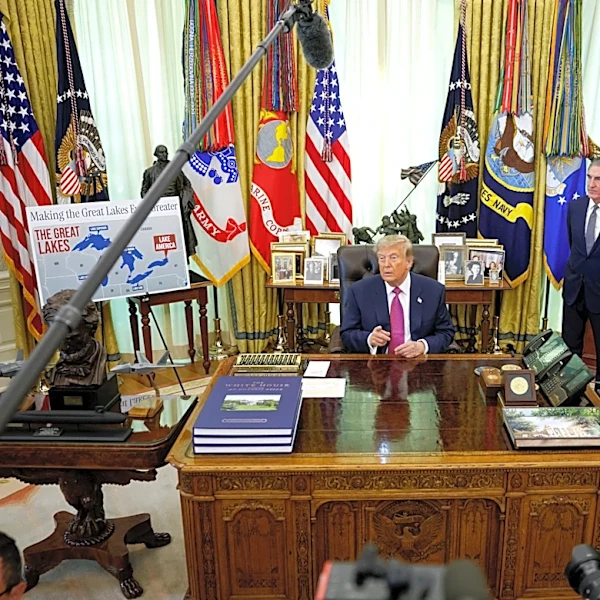
During a radio interview with conservative personality Glenn Beck, President Trump discussed the issue of a perceived 'monopoly' within the U.S. beef processing industry. Beck, who is also a rancher, raised concerns that a small number of companies control
the industry, leading to inflated prices. President Trump acknowledged these concerns, questioning whether the issue was primarily a matter of regulation and which agency, specifically the Department of Agriculture, was responsible for overseeing these regulations. He referred to the industry as a 'monopoly' and noted that Beck's claim about inspection standards preventing more processors from entering the market was a significant point. President Trump expressed surprise that ranchers and farmers had not addressed this issue previously, stating it had been ongoing 'before I got here.' He concluded by indicating that Beck's insights had given him 'a very good idea' without elaborating further.
Why It's Important?
The President's acknowledgment of a 'monopoly' in the beef processing industry and his expressed interest in addressing it carries significant implications for the U.S. agricultural sector, consumers, and the broader economy. A concentrated industry can lead to reduced competition, potentially resulting in higher prices for consumers and lower payments for ranchers. This issue has been a long-standing concern for many in the agricultural community, who argue that the current structure disadvantages independent producers. If the administration were to pursue actions to break up this perceived monopoly, it could lead to substantial changes in how beef is processed and distributed, potentially increasing competition, lowering consumer costs, and providing more equitable returns for ranchers. Conversely, such interventions could face strong opposition from large processing companies, who might argue that their scale allows for efficiencies and that regulatory changes could disrupt supply chains and increase costs. The discussion highlights the ongoing tension between market concentration and fair competition within critical U.S. industries.
What's Next?
Following President Trump's remarks, the immediate next steps are unclear, as he did not elaborate on the 'very good idea' he mentioned. However, his comments suggest a potential for future administrative action or policy discussions regarding the beef processing industry. This could involve directing the Department of Agriculture or other relevant agencies to investigate current regulations, market concentration, and potential anti-competitive practices. Stakeholders, including ranchers, consumer advocacy groups, and the major beef processing companies, will likely be closely monitoring any further statements or actions from the administration. Ranchers and farmers may intensify their lobbying efforts for reforms, while large processors could prepare to defend their business models and argue against government intervention. The issue could also become a point of discussion in upcoming political campaigns, as affordability and economic competition are key concerns for voters.
Beyond the Headlines
The discussion about the beef processing industry extends beyond immediate economic concerns, touching upon broader themes of corporate power, food security, and the resilience of the U.S. food supply chain. The concentration of power in a few large companies raises questions about vulnerability to disruptions, whether from natural disasters, pandemics, or cyberattacks, which could have cascading effects on food availability and prices. Furthermore, the debate over 'monopolies' in essential industries often involves ethical considerations about fair treatment for small businesses and independent producers, and the balance between corporate efficiency and equitable distribution of wealth. Any significant policy changes in this sector could set precedents for how the U.S. government approaches market concentration in other critical industries, potentially signaling a shift towards more interventionist economic policies aimed at fostering competition and protecting smaller players.