
What's Happening?
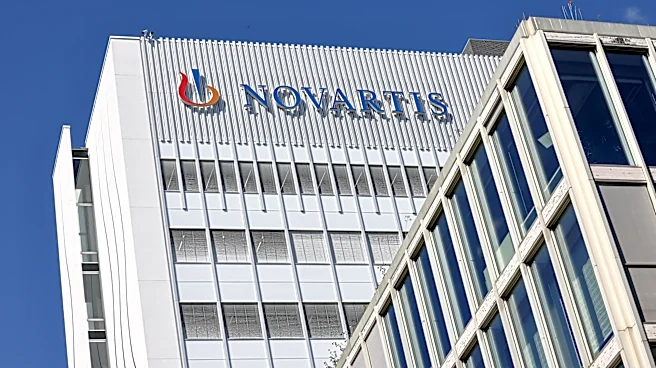
Novartis CEO Vas Narasimhan has pushed back against optimistic claims from the artificial intelligence industry regarding its immediate impact on medical breakthroughs, particularly in curing cancer. Narasimhan argues
that AI will require a full decade to reduce the average drug development timeline by only four years, from 12 years to approximately eight years. He also projects that the success rate for drug candidates entering human trials could increase from 8% to 12% over the next ten years. In an interview, Narasimhan, who is also on the board of Anthropic, attributed the gap between AI hype and reality to the limited understanding of human biology, estimating that scientists comprehend only about 5% of what occurs inside the human body. He noted that while AI can save up to two years in early discovery, lengthy clinical trials remain unavoidable.
Why It's Important?
This statement from a prominent pharmaceutical CEO like Vas Narasimhan is crucial for setting realistic expectations within the U.S. healthcare and technology sectors. It provides a counter-narrative to the often-exaggerated promises of AI, emphasizing the inherent complexities of biological research. For pharmaceutical companies, this means that while AI tools are valuable, they are not a substitute for fundamental scientific inquiry and rigorous testing. Investors and policymakers should consider this perspective when allocating resources and developing strategies for AI integration in medicine. A more grounded understanding of AI's capabilities can prevent overinvestment in unproven applications and direct focus towards areas where AI can genuinely augment human expertise, such as data analysis and pattern recognition, rather than replacing the entire drug development process. The potential for four more successful drugs per 100 candidates, while seemingly small, represents a significant impact on patient health and market opportunities.
What's Next?
The pharmaceutical industry will likely continue to strategically integrate AI into its research and development pipelines, focusing on specific applications where it can demonstrate measurable improvements. This includes leveraging AI for early-stage drug discovery, optimizing clinical trial design, and analyzing vast datasets to identify potential drug targets. However, Narasimhan's comments suggest that there will be a continued emphasis on traditional biological research and clinical validation. The industry will also need to address the challenge of bridging the knowledge gap in human biology, potentially using AI to accelerate this understanding over time. Collaboration between AI developers and medical experts will be essential to ensure that AI tools are developed and applied effectively, leading to incremental but meaningful advancements in healthcare rather than immediate, revolutionary cures.
Beyond the Headlines
Narasimhan's assertion that we understand only 5% of human biology highlights a profound scientific challenge that AI alone cannot immediately overcome. This suggests that while AI can process and analyze existing data at unprecedented speeds, it cannot create new biological knowledge from scratch. The deeper implication is that true medical breakthroughs will still require a combination of advanced technology, fundamental scientific discovery, and rigorous human-led research. This perspective also raises questions about the ethical responsibilities of AI developers and pharmaceutical companies in managing public expectations and ensuring that AI is used responsibly and transparently. The long-term success of AI in medicine will depend not just on its computational power, but on its ability to integrate seamlessly with human intelligence and ethical considerations, fostering a more holistic approach to healthcare innovation.