







What's Happening?
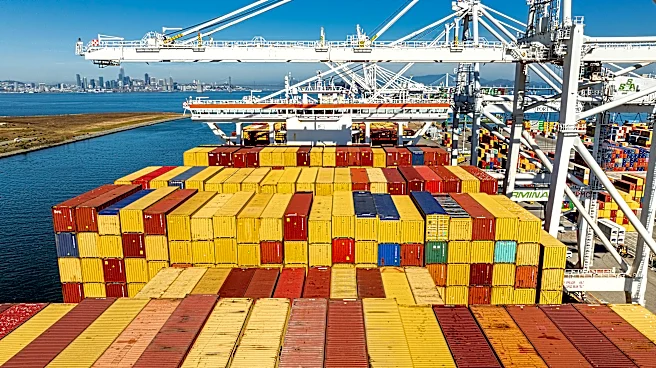
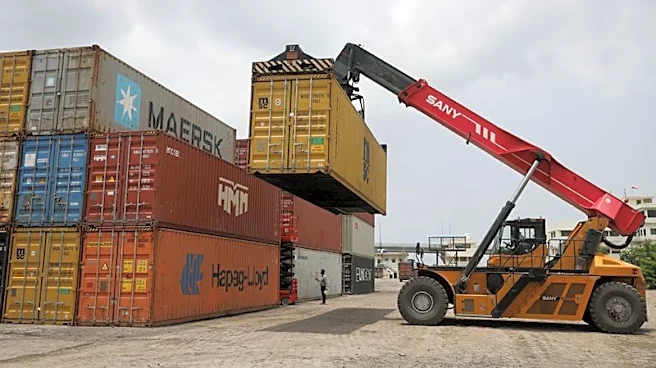
The Trump administration's imposition of new global tariffs ranging from 10 to 12.5% is impacting U.S. manufacturing stocks, creating shifts in costs and pricing power. BlueLinx Holdings, a U.S.-based distributor of building products, is positioned to benefit
from these tariffs due to its domestic focus, which limits exposure to import cost shocks. The company is expanding into higher-margin specialty categories, although it faces challenges with recent net losses and funding risks. Matrix Service, an engineering and construction company, is also navigating the tariff landscape with a focus on U.S.-based infrastructure projects and a $7 billion project pipeline. Generac Holdings, an energy technology company, is leveraging its U.S. production capabilities to capitalize on the demand for reliable power solutions, despite facing challenges related to borrowing and supply chain sensitivities.
Why It's Important?
The reintroduction of tariffs by the Trump administration is reshaping the competitive landscape for U.S. manufacturing companies. Firms like BlueLinx Holdings, Matrix Service, and Generac Holdings are strategically positioned to capitalize on domestic production advantages, potentially gaining market share from import-reliant competitors. However, these companies must navigate financial challenges, such as funding risks and execution on large projects, to fully benefit from the tariff environment. The ability to adapt to these changes will determine their long-term success and attractiveness to investors.
What's Next?
As the tariff situation evolves, U.S. manufacturing companies will need to continuously assess their strategies to mitigate risks and capitalize on opportunities. BlueLinx Holdings may focus on improving profitability and reducing reliance on external borrowing. Matrix Service will likely prioritize executing its project pipeline efficiently to enhance profitability. Generac Holdings may need to address supply chain vulnerabilities while expanding its high-value segments. Investors will be watching these companies closely to gauge their ability to adapt and thrive in a tariff-influenced market.