
What's Happening?
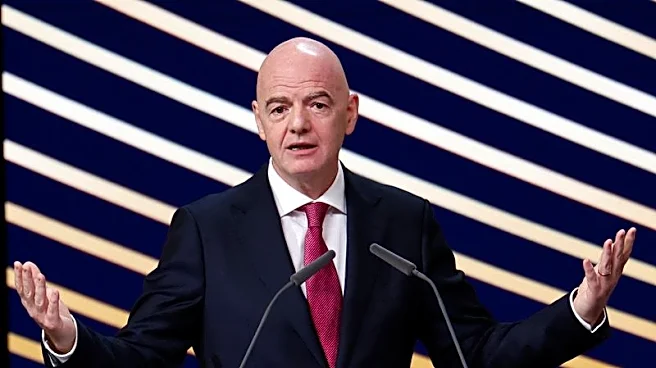
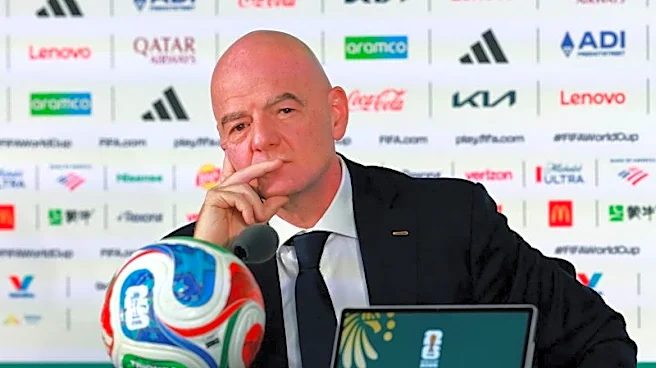
Uefa has reiterated its stance to boycott Fifa-run competitions, maintaining its lack of confidence in Gianni Infantino's presidency. This decision comes despite Fifa's public backing of Infantino. Uefa's 55 member associations had previously agreed to boycott Fifa tournaments
unless Infantino withdrew his Fifa Forward Enterprise scheme, which he did. However, Uefa remains unconvinced that similar issues won't arise again. The boycott threat is part of a broader criticism of Infantino's leadership, with accusations of governance failures and abuse of presidential power. The situation has created significant turmoil within football's governance structures.
Why It's Important?
The ongoing conflict between Uefa and Fifa highlights significant governance issues within international football. Uefa's stance could lead to a major disruption in global football events, affecting players, fans, and stakeholders. The situation underscores the need for transparency and accountability in sports governance. It also reflects broader tensions within the football community regarding leadership and decision-making processes. The potential boycott could impact upcoming tournaments, including the Under-20 Women's World Cup, and influence future governance reforms within Fifa.
What's Next?
If no resolution is reached, the Under-20 Women's World Cup in Poland could be the first tournament affected by Uefa's boycott. Uefa hopes to leverage divisions within Fifa's leadership to push for governance reforms. The situation may lead to further discussions and negotiations between Uefa and Fifa to address the underlying issues. The outcome of these negotiations could have long-term implications for the governance and structure of international football.