


What's Happening?
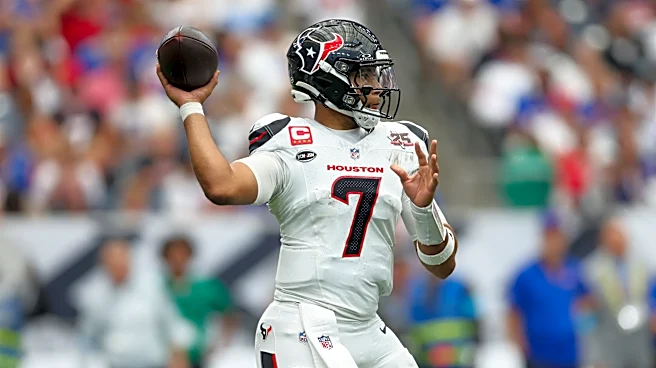
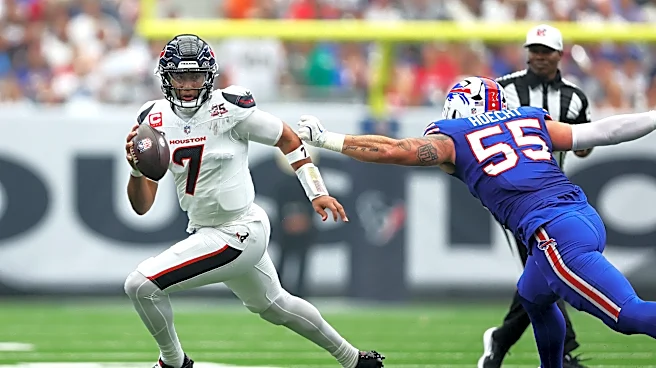
Houston Texans quarterback C.J. Stroud has responded to comments made by Texans Hall of Famer Andre Johnson regarding his body language. Johnson, during an appearance on the 'LGND Talk' podcast, stated that Stroud's demeanor, particularly during the postseason,
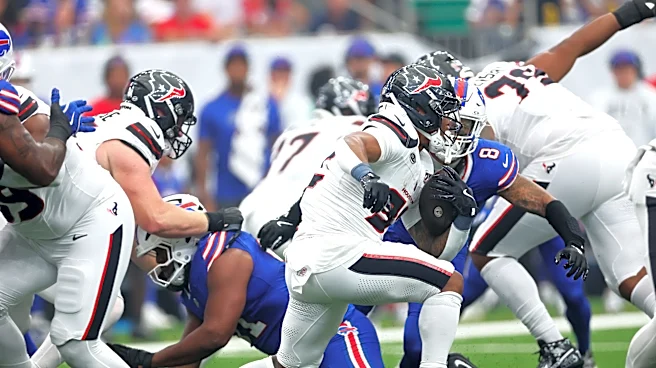
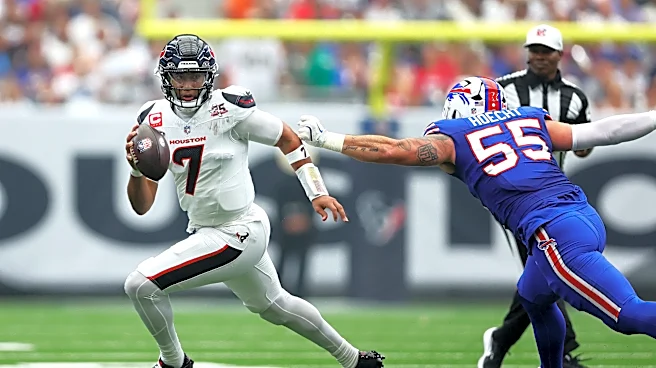
negatively impacts team morale and is a 'bad look internally.' Johnson specifically highlighted instances where Stroud's body language did not exude confidence during struggles, suggesting it could 'trickle down to the team.' Stroud, while acknowledging and respecting Johnson's critiques, emphasized his focus on the upcoming Week 2 game against the Cincinnati Bengals. He stated, 'I respect Dre as a person; I appreciate his critiques. But I'm focused on this week, going 1-0 this week [against the Bengals].' This discussion comes after Stroud's strong performance in Week 1, where he completed 26 of 38 passes for 274 yards and two touchdowns, despite a 36-31 loss to the Buffalo Bills. Johnson himself later complimented Stroud's improved attitude during the loss, noting a 'different side of C.J.'
Why It's Important?
This public critique from a franchise legend like Andre Johnson carries significant weight within the Texans organization and among its fanbase. For C.J. Stroud, a young quarterback who did not receive a contract extension this offseason and is playing without a new deal, maintaining team cohesion and projecting strong leadership is crucial for his future with the franchise. Johnson's comments, while critical of past behavior, highlight the intense scrutiny and high expectations placed on a team's starting quarterback, especially one seen as the face of the franchise. The debate sparked by Johnson's remarks underscores the importance of a quarterback's perceived leadership qualities beyond just on-field statistics. It also reflects the ongoing narrative around Stroud's development and his ability to inspire confidence, particularly after a postseason performance that drew criticism. The team's response, with teammates and coaches praising Stroud's maturity and focus, indicates an effort to rally around their quarterback and maintain a positive team environment.
What's Next?
C.J. Stroud's immediate focus is on the upcoming Week 2 matchup against the Cincinnati Bengals. His performance in this game, both statistically and in terms of his on-field demeanor, will be closely watched by fans, analysts, and potentially Andre Johnson himself. The ongoing conversation about his body language and leadership will likely continue to be a talking point throughout the season, especially as the Texans navigate critical games. Should the team perform well and Stroud continue to demonstrate strong leadership, the criticism from Johnson may fade. Conversely, any perceived lapses in his demeanor during challenging moments could reignite the debate. The situation also puts a spotlight on the relationship between current players and franchise legends, and how such public critiques are handled internally. Stroud's decision to respectfully acknowledge the criticism while prioritizing the team's immediate goals suggests a mature approach to external pressures.
Beyond the Headlines
The public discourse surrounding C.J. Stroud's body language extends beyond simple on-field performance; it touches upon the broader psychological and cultural aspects of leadership in professional sports. A quarterback's demeanor is often seen as a barometer for the team's overall confidence and resilience. Johnson's comments, while potentially harsh, reflect a traditional view that a leader must project unwavering confidence, even in adversity, to prevent negative sentiment from 'trickling down' to the rest of the team. This incident also highlights the evolving nature of athlete-media interactions, with former players now having direct platforms like podcasts to voice their opinions, which can create internal friction. For Stroud, navigating this public scrutiny while maintaining focus on his performance and team goals is a significant test of his mental fortitude and leadership development. It underscores the immense pressure on young athletes to not only excel physically but also to manage their public image and internal team dynamics effectively.