


What's Happening?
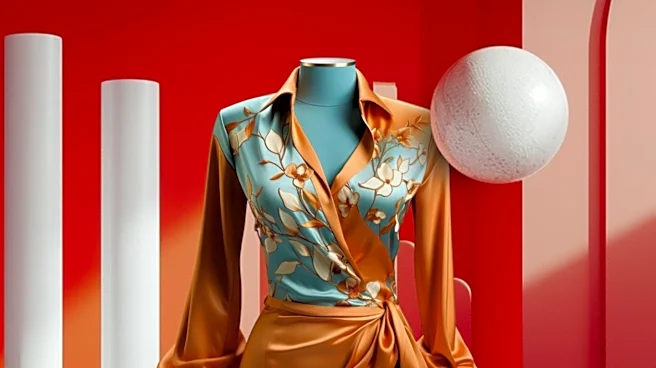
Blumarine, an Italian luxury fashion house, is making waves in the fashion industry with the revival of a 2000s-inspired blouse. This trend is part of a broader movement where designers revisit past aesthetics, particularly from the early 2000s, but with a modern
twist. The updated version of the blouse, which was once popularized by celebrities like Britney Spears and Jessica Alba, now features longer lengths, lightweight fabrics, and intricate details such as lace inserts and asymmetrical hems. This resurgence is evident in the latest collections from brands like Chloé, Blumarine, and Roberto Cavalli, where the focus is on fabric quality and proportions rather than overt extravagance.
Why It's Important?
The return of the 2000s-inspired blouse signifies a shift in fashion trends towards nostalgia, where past styles are reimagined to fit contemporary tastes. This trend reflects a broader cultural movement where consumers seek comfort and familiarity in fashion, especially in uncertain times. For the fashion industry, this revival offers opportunities for brands to tap into the growing demand for retro-inspired pieces, potentially boosting sales and brand engagement. It also highlights the cyclical nature of fashion, where past trends are continuously reinvented to appeal to new generations.
What's Next?
As the trend gains momentum, it is likely that more fashion houses will incorporate elements from the early 2000s into their collections. This could lead to a broader acceptance of retro styles in mainstream fashion, influencing consumer purchasing decisions. Fashion influencers and celebrities may play a crucial role in popularizing these styles, further driving demand. Additionally, the trend may inspire new collaborations between designers and brands, aiming to create unique pieces that blend nostalgia with modernity.
Beyond the Headlines
The resurgence of 2000s fashion also raises questions about sustainability in the fashion industry. As brands revisit past trends, there is an opportunity to focus on sustainable practices, such as using eco-friendly materials and ethical production methods. This could align with the growing consumer demand for sustainable fashion, potentially leading to a positive impact on the environment. Moreover, the trend highlights the importance of innovation in fashion, where designers must balance nostalgia with contemporary relevance to stay competitive.