









What's Happening?
The euro is currently experiencing significant pressure, positioning it as one of Europe's weakest currencies. This weakness is primarily attributed to escalating French economic stress and political unrest. The gap between French and German ten-year
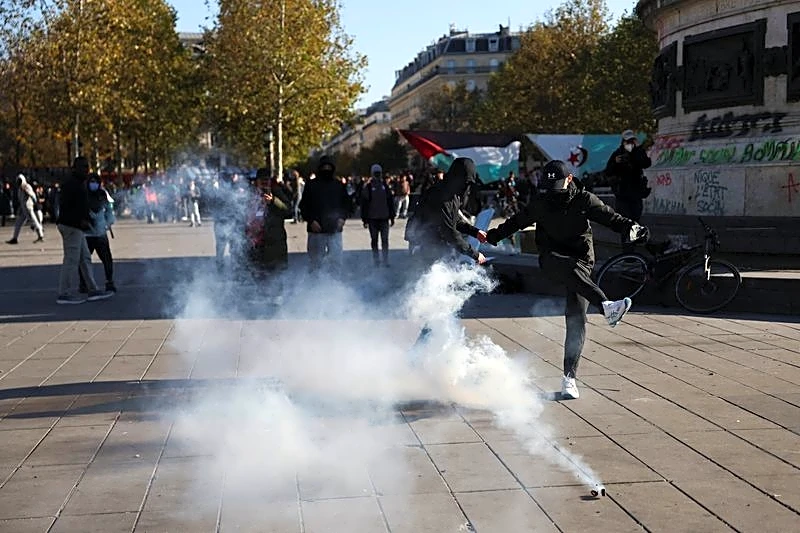
borrowing costs, a key indicator of French economic stability, widened to 148 basis points on Monday, reaching its broadest level since 2012. This surge in borrowing costs followed a weekend of violent protests across France. Kit Juckes, Chief FX Strategist at Societe Generale, noted that the euro has enough inherent problems to remain one of Europe's weakest currencies and could potentially become the weakest among the G10 currencies this year once market positioning stabilizes. Bank of America suggests that the euro's downside is best observed in cross-currency trades.
Why It's Important?
The euro's struggle has significant implications for global financial markets and U.S. economic interests. A weakening euro can impact trade balances, making U.S. exports more expensive for European consumers and European imports cheaper for U.S. consumers. This shift could affect the competitiveness of American businesses operating internationally. Furthermore, the instability in a major global currency like the euro can lead to broader market volatility, potentially influencing investment decisions and capital flows into and out of the U.S. The underlying French economic stress, as indicated by widening borrowing costs and political unrest, highlights a potential for broader European economic challenges that could indirectly affect U.S. economic stability through interconnected global markets and trade relationships. Investors may seek safer assets, potentially leading to increased demand for the U.S. dollar, which could further strengthen it against the euro.
What's Next?
The immediate future for the euro will likely depend on the resolution of French political unrest and the market's reaction to ongoing economic data. Analysts anticipate that once market positioning settles, the euro's true standing among G10 currencies will become clearer. The Bank of England's potential interest rate hikes are also being closely watched, as they could influence the pound-to-euro exchange rate and further highlight the euro's relative weakness. Should French economic indicators continue to deteriorate or political instability persist, the euro could face sustained downward pressure. Conversely, any signs of stabilization or positive economic reforms in France could provide some support to the currency. The market will also be observing whether the euro's devaluation attracts fresh investment into European assets, which could offer a potential pathway to recovery.
Beyond the Headlines
The euro's current predicament extends beyond mere economic indicators, touching upon deeper geopolitical and societal implications. The violent protests in France, which have contributed to the currency's stress, underscore underlying social and political tensions within a key European Union member state. This situation highlights the intricate link between domestic political stability and international economic confidence. A prolonged period of euro weakness could challenge the economic cohesion of the Eurozone, potentially leading to broader discussions about fiscal policies and economic integration among member states. For the U.S., while a weaker euro might offer some trade advantages in the short term, long-term instability in a major economic bloc like the EU could pose risks to global economic growth and international cooperation, impacting U.S. foreign policy and trade strategies.