




What's Happening?
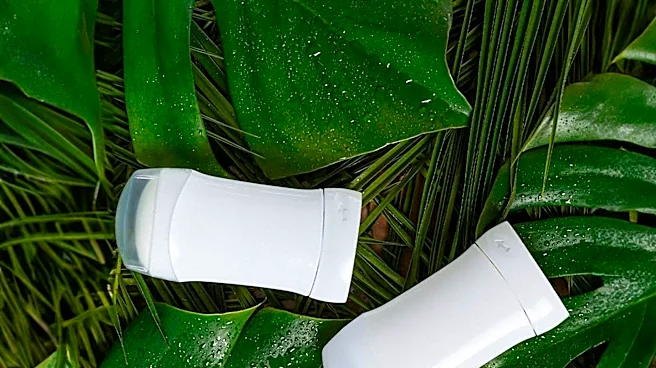
In 2026, consumers are increasingly seeking refillable products as a key eco-friendly trend. This shift is driven by a growing awareness of environmental impact and a desire to reduce waste. Products such as soaps, cleaning supplies, and beauty items
are at the forefront of this movement, allowing consumers to reuse original containers rather than discarding them after a single use. This practice significantly decreases the production and disposal of new containers. Businesses are responding to this demand by expanding their lines of reusable products. For example, the 'Great Guest Starter Kit' offers a cost-effective solution for switching to non-toxic, refillable cleaning products, providing reusable vessels and concentrated pouches that make multiple bottles of product. This kit is designed to last 4–6 months, highlighting the economic and environmental benefits for consumers.
Why It's Important?
The rising consumer demand for refillable products signifies a substantial shift in market dynamics and consumer behavior within the U.S. This trend impacts various industries, from household goods to personal care, compelling businesses to innovate and adapt their product offerings. Companies that embrace refillable systems stand to gain a competitive advantage by aligning with consumer values and potentially reducing their own production costs associated with packaging. Conversely, businesses slow to adopt sustainable practices may face declining market share and reputational damage. The emphasis on reducing single-use items also has broader implications for waste management and resource conservation, potentially leading to a decrease in landfill waste and a more circular economy. This movement encourages a re-evaluation of product lifecycles and supply chains across the nation.
What's Next?
Looking ahead, the market is expected to see continued expansion in the range of refillable products available, alongside advancements in refill system infrastructure. Businesses will likely invest further in research and development to overcome challenges related to the collection, inspection, cleaning, and redistribution of reusable packaging, aiming for safe, efficient, and economically viable solutions at scale. Consumers can anticipate more accessible and diverse options for refilling everyday products, potentially through in-store refill stations, subscription services, or direct-to-consumer models. This trend could also spur policy discussions around packaging waste reduction and incentives for sustainable consumption, influencing future regulations and industry standards. The success of these initiatives will depend on both corporate commitment and sustained consumer engagement.
Beyond the Headlines
The shift towards refillable products extends beyond mere environmental benefits, touching upon deeper cultural and economic implications. It fosters a more conscious consumption mindset, encouraging consumers to value product longevity and resource efficiency over disposability. This cultural change could lead to a broader re-evaluation of 'convenience' and its environmental cost. Economically, it presents opportunities for new business models focused on service and reuse rather than just product sales, potentially creating new jobs in logistics, cleaning, and maintenance of refill systems. Furthermore, the emphasis on non-toxic and plant-based ingredients in many refillable products, such as those in the 'Great Guest Starter Kit,' highlights a growing consumer preference for healthier and safer alternatives, influencing product formulation and ingredient sourcing across the industry.