






What's Happening?
Ford Motor Company is significantly expanding its use of 3D printing technology across its manufacturing plants to enhance efficiency, reduce costs, and accelerate production. The automaker is deploying additive manufacturing departments in many facilities,
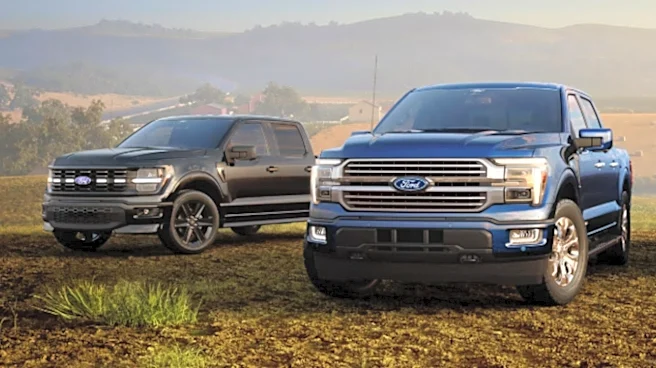
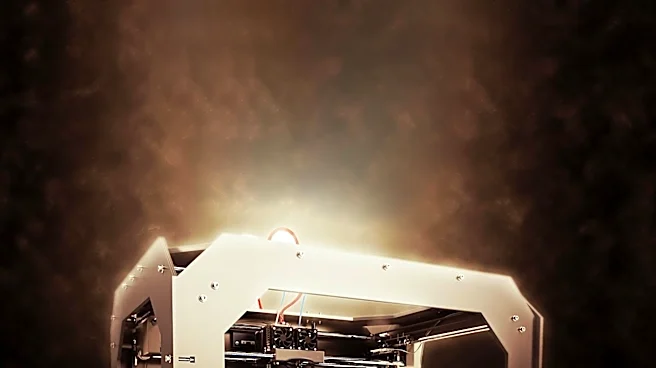
including a new vending machine system for 3D-printed parts at its Dearborn, Michigan, headquarters for F-150 pickup truck production. This initiative allows team leaders and employees to access and request custom tools and parts, such as torque bit sockets and hood jackers, directly on-site. Gregory Foresi, a Ford mechanical engineer, noted that this system helps keep parts stocked and readily available, preventing production delays. Ford anticipates having 3D labs in over 23 plants by the end of the year, with its current program utilizing more than 200 machines. The technology has also been crucial in maintaining assembly line operations by providing temporary 3D-printed parts until permanent replacements from suppliers become available.
Why It's Important?
The widespread adoption of 3D printing by Ford signifies a major shift in automotive manufacturing, with substantial implications for the U.S. industry. This technology enables faster prototyping, on-demand production of specialized tools and low-volume parts, and significant cost savings by reducing reliance on external suppliers and traditional tooling methods. For Ford, this means increased operational agility, improved supply chain resilience, and the ability to customize manufacturing processes more effectively. The ability to quickly produce parts in-house can mitigate disruptions, such as those caused by supply chain issues, and keep production lines running. This move also fosters innovation among employees, who can design and request tools tailored to specific needs, potentially leading to more ergonomic and efficient workflows. Ultimately, this strategy enhances Ford's competitive edge in a rapidly evolving automotive landscape, particularly as it navigates the transition to electric vehicles.
What's Next?
Ford plans to continue integrating 3D printing into more of its global manufacturing operations, with a goal of deploying 3D labs in over 23 plants by the end of the current year. This expansion will likely lead to further optimization of production processes and a broader range of applications for 3D-printed components and tools. The company's focus on 'democratizing' 3D printing by making it accessible to more employees suggests a future where on-demand manufacturing becomes a standard practice across its facilities. As the technology advances, Ford may explore using 3D printing for more complex or critical vehicle components, further reducing production times and costs. This trend could also influence other U.S. automakers to accelerate their own adoption of additive manufacturing, driving broader innovation and efficiency gains across the domestic automotive sector.
Beyond the Headlines
The increasing reliance on 3D printing in manufacturing, as exemplified by Ford, points to a broader industrial transformation. This technology not only offers practical benefits in terms of speed and cost but also has profound implications for intellectual property, workforce development, and supply chain decentralization. As companies produce more parts in-house, it could lead to a re-evaluation of traditional supplier relationships and a greater emphasis on internal design and engineering capabilities. Furthermore, the demand for skilled workers proficient in additive manufacturing will likely grow, necessitating new training programs and educational pathways. The ability to print parts on demand could also contribute to more sustainable manufacturing practices by reducing waste and optimizing material usage. This shift could ultimately reshape the global manufacturing landscape, making production more localized and responsive to immediate needs.