



What's Happening?
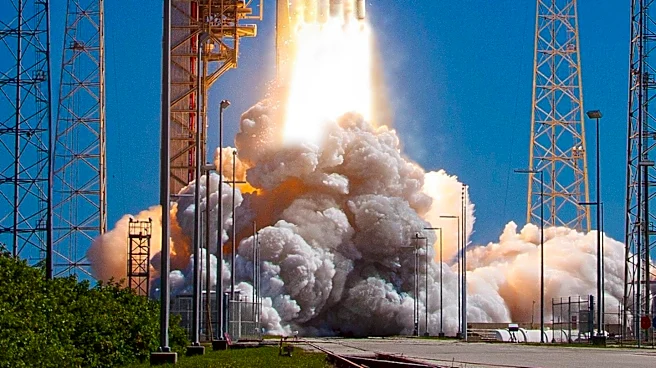
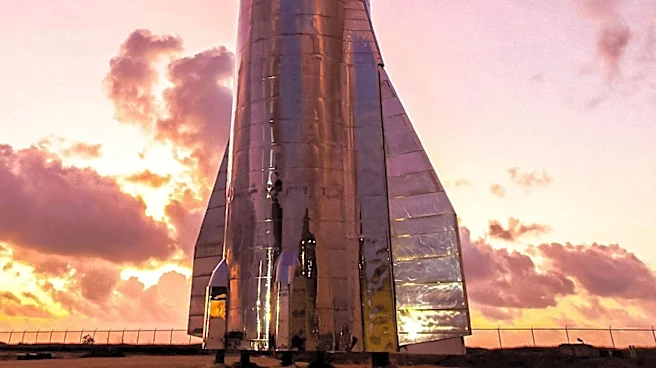
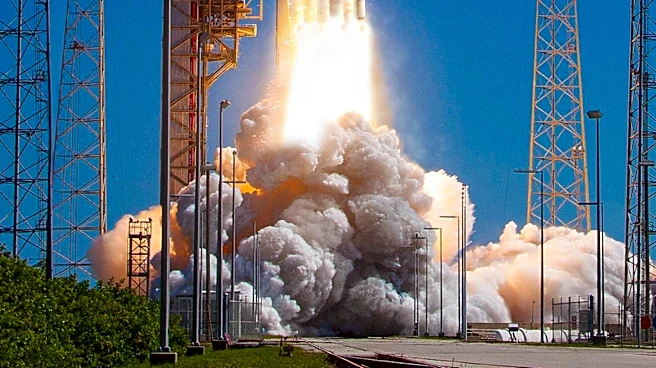
According to Citi, SpaceX's lead in launch technology has expanded from a 10-15 year advantage to a 20-year advantage, following the successful capture of a Starship upper stage by its launch tower. This development further distances SpaceX from competitors
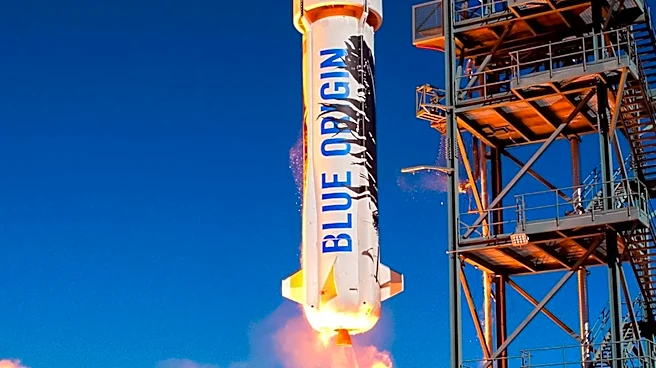
like Amazon, AST SpaceMobile, and Rocket Lab, which still rely on other companies' rockets. While launch technology is a critical component, analysts, including Rory O’Driscoll of Scale Venture Partners, emphasize that the majority of SpaceX's business and market capitalization is driven by its 'compute' segment, particularly its AI offerings. Starlink's Connectivity segment reported a GAAP operating income of $5.21 billion in the first nine months of 2026, with a 40.7% margin, an increase from 38.6% a year prior. This margin improvement occurred despite a decrease in the average revenue per subscriber, indicating significant cost reductions, partly due to SpaceX's efficient launch capabilities.
Why It's Important?
The widening gap in launch technology has significant implications for the U.S. space and telecommunications industries. Companies like Amazon and AST SpaceMobile, which are developing their own satellite constellations, face increased reliance on external launch providers, potentially leading to higher costs and delays. Rocket Lab, a public launch rival, is also struggling to match SpaceX's scale and pricing. This dominance by SpaceX could stifle competition and innovation in the launch sector, concentrating power within a single entity. For investors, while Starlink's profitability is growing, the primary driver of SpaceX's expected revenue growth, projected to reach $336 billion by 2028, is its 'compute' or AI business. This shift highlights a broader trend in the tech industry where infrastructure and AI capabilities are becoming central to valuation and market leadership.
What's Next?
SpaceX's future growth is heavily dependent on its 'compute' business, which contributed significantly to its third-quarter revenue. However, this segment carries risks, as a single customer accounted for 34.5% of its third-quarter revenue, and contracts can be terminated with 90 days' notice. Elon Musk anticipates weekly Starship flights in the first half of 2027, and the fourth-quarter results in early 2027 will be crucial in determining if Starlink's Connectivity margin can sustain above 40% with increased flight activity. The continued expansion of SpaceX's launch capabilities and the performance of its AI segment will dictate its market position and financial trajectory in the coming years, influencing the competitive landscape for satellite internet and space launch services.
Beyond the Headlines
The increasing dominance of SpaceX in launch technology and its growing reliance on its AI 'compute' business raise questions about market concentration and the future of space exploration and satellite internet. While SpaceX's innovations have driven down launch costs and expanded access to space, the potential for a single company to hold such a significant advantage could lead to concerns about monopolies and fair competition. The integration of AI into its business model also signifies a broader technological convergence, where space infrastructure becomes a platform for advanced computing services. This trend could reshape how data is processed and transmitted globally, with profound implications for national security, economic development, and technological sovereignty.