






What's Happening?
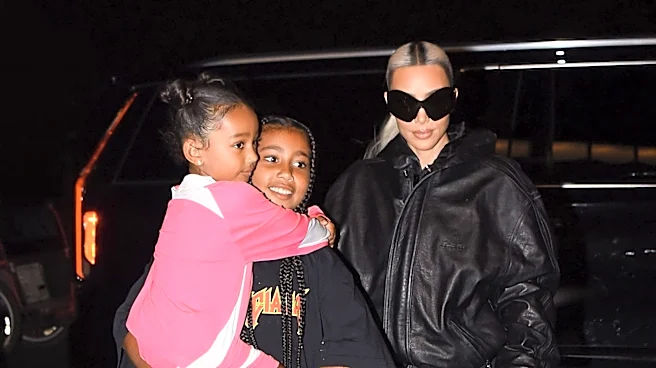
Kim Kardashian has recently drawn significant online criticism following her disclosure of employing five nannies for her four children. Kardashian, who shares primary custody of her children North, Saint, Chicago, and Psalm with ex-husband Kanye West,
stated that one nanny is on duty at a time while the other four work in rotation. This revelation sparked a divided reaction on social media, with many users criticizing her for the extensive childcare support, labeling her a 'neglectful mom' and questioning her involvement in parenting. Conversely, some users defended her, arguing that her arrangement is reasonable for her lifestyle and wealth. Kardashian has emphasized her hands-on approach to parenting, stating that she takes her children to and from school daily and has dinner with them every night. She also described herself as an 'intermediate-strict parent' who is patient and loving, often reading books with her children and allowing them to sleep in her bed when they wish. This is not the first time Kardashian has faced such scrutiny; similar discussions arose in 2023 after she spoke about the challenges of parenting four children on a podcast.
Why It's Important?
This public discourse surrounding Kim Kardashian's childcare choices highlights broader societal debates about parenting, wealth, and the perception of maternal roles in the public eye. The criticism she faces often stems from a comparison to the average parent, particularly single mothers, who typically lack the financial resources to employ extensive childcare. This disparity fuels discussions about privilege and the realities of parenting across different socioeconomic strata. For public figures like Kardashian, such revelations can impact their public image and brand, as they are often held to idealized standards of parenthood. The defense she receives also underscores a segment of the public that recognizes the demands of managing a large family, especially for individuals with demanding careers and public lives. The ongoing debate reflects differing views on what constitutes 'good' parenting and whether utilizing significant childcare resources diminishes a parent's involvement or effectiveness. It also brings to light the challenges of balancing personal life, career, and public expectations for high-profile individuals.
What's Next?
The immediate aftermath of such disclosures for public figures like Kim Kardashian typically involves continued social media discussion and media commentary. While there may not be direct policy implications, the ongoing conversation could influence public perception of celebrity parenting and childcare norms. Kardashian may choose to further address the criticism, either by elaborating on her parenting philosophy or by continuing to share aspects of her family life that demonstrate her involvement. The incident could also prompt other public figures to be more cautious or transparent about their own childcare arrangements, or it might encourage a broader dialogue about the societal pressures placed on parents, regardless of their economic status. For Kardashian's brand, SKIMS, and other ventures, maintaining a positive public image is crucial, and managing these types of controversies is an ongoing aspect of celebrity public relations. Future interviews or social media posts from Kardashian regarding her family life will likely be scrutinized through the lens of this recent debate.
Beyond the Headlines
Beyond the immediate headlines, this situation touches upon deeper societal issues concerning the commodification of care work and the evolving definition of family structures in modern society. The employment of multiple nannies by wealthy individuals like Kardashian reflects a growing trend where specialized labor is hired to manage various aspects of household and family life, blurring traditional lines of parental responsibility. This can lead to ethical discussions about the value of paid care work versus unpaid parental labor, and how society assigns worth to each. Furthermore, the public's strong reaction highlights a cultural tension between aspirational lifestyles often portrayed by celebrities and the everyday realities faced by most families. It also underscores the persistent societal expectation for mothers, regardless of their professional achievements or financial status, to be the primary caregivers, often leading to judgment when these expectations are perceived as unmet. This ongoing dialogue contributes to the broader conversation about work-life balance, gender roles, and the economic realities of raising children in contemporary America.