





What's Happening?
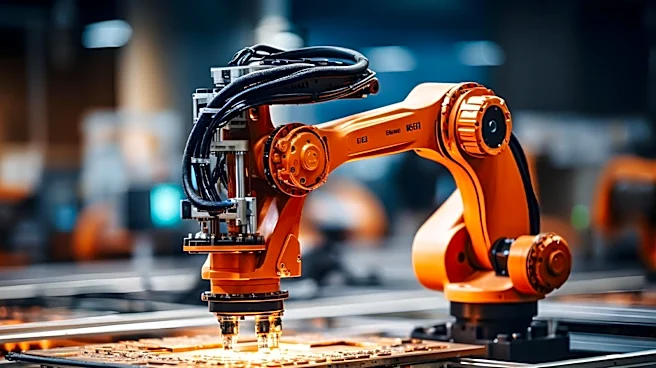
AI agents and physical AI are fundamentally changing industrial automation, moving it beyond traditional equipment supply towards autonomous, self-optimizing systems. Leading vendors are transitioning from pilot programs to full production, with robots
navigating complex environments and digital twins optimizing entire value chains. Key trends include the linking of AI systems across design, logistics, manufacturing, and maintenance by industry leaders like Siemens Industry and ABB, creating compounding benefits. Optimization is a near-term priority, while digital twins are emerging as crucial backbones connecting hardware and software. Partnerships with major tech companies such as Microsoft, Google, and Nvidia are essential for expanding capabilities, though they introduce new dependencies.
Why It's Important?
This shift signifies a major transformation in industrial productivity and efficiency. Autonomous systems can operate with greater precision, speed, and consistency than traditional methods, leading to reduced operational costs, improved quality, and enhanced safety. The integration of AI across the entire value chain allows for real-time optimization and predictive maintenance, minimizing downtime and maximizing output. For U.S. industries, this means a potential boost in global competitiveness, but also requires significant investment in new technologies, data infrastructure, and workforce retraining. Companies that successfully embed AI into their platforms and operations will gain a durable advantage, while those that lag may face increased operational inefficiencies and competitive pressures.
What's Next?
The path forward in industrial AI will involve moving beyond isolated tools and pilots to deeply embedding AI into platforms and linking technologies across various domains. Vendors will need to carefully balance the benefits of external tech partnerships with the need for strategic independence. Industrial firms must adapt by shifting from isolated AI use cases to integrating AI across design, production, energy, and logistics. Success will depend not only on advanced tools but also on developing the necessary data infrastructure, skills, and processes to scale AI in complex operational environments. This will likely lead to increased demand for AI specialists and data scientists within industrial sectors.
Beyond the Headlines
The widespread adoption of AI in industrial automation raises deeper implications regarding the future of work and the nature of industrial production. As systems become more autonomous, there will be a significant impact on labor markets, potentially displacing some traditional roles while creating new ones focused on AI management, maintenance, and development. Ethical considerations around the use of AI in critical infrastructure and manufacturing processes, including safety protocols and decision-making transparency, will become increasingly important. Furthermore, the reliance on digital twins and interconnected AI systems could introduce new cybersecurity vulnerabilities, necessitating robust protection measures to safeguard industrial operations from cyber threats. This transformation represents a fundamental re-imagining of how goods are produced and managed.