





What's Happening?
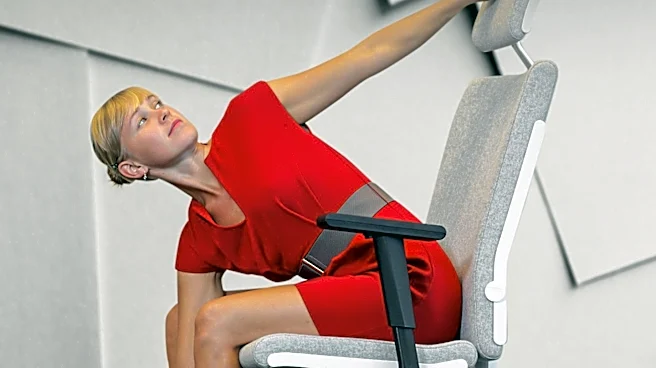
Certified personal trainer James Brady from OriGym recommends four chair-based exercises for individuals over 60 to restore leg strength more effectively than some gym workouts. These exercises are designed to provide stability while training muscles
essential for daily movements like standing, sitting, and walking. The recommended exercises include Chair Sit-to-Stands, Seated Knee Extensions, Seated March, and Chair Calf Raises. Chair Sit-to-Stands strengthen quads, glutes, and hamstrings, improving independence. Seated Knee Extensions isolate quadriceps, crucial for walking and reducing fall risk. The Seated March strengthens hip flexors, core, balance, and coordination. Chair Calf Raises improve ankle stability and make activities like walking and standing easier. Studies indicate that chair-based programs can significantly improve upper and lower body function in older adults.
Why It's Important?
This approach to fitness is particularly important for the U.S. senior population, as it addresses common barriers to exercise such as balance issues, fear of injury, and accessibility to gyms. By offering effective, low-impact, and easily performable exercises at home, it empowers older adults to maintain and improve their leg strength, which is directly linked to functional independence and a reduced risk of falls. This can lead to a significant improvement in the quality of life for seniors, potentially lowering healthcare costs associated with age-related injuries and long-term care. The emphasis on functional movements ensures that the strength gained directly translates to better performance in daily activities, fostering greater autonomy and well-being.
What's Next?
Seniors are encouraged to incorporate these chair-based exercises into their regular routines, performing them consistently to build and maintain leg strength. Fitness and healthcare professionals may increasingly integrate these types of accessible exercises into their recommendations for older adults, recognizing their proven benefits. There is potential for wider adoption of chair-based exercise programs in community centers, senior living facilities, and online platforms, making fitness more inclusive and attainable for the elderly. This could lead to a broader public health initiative focused on promoting functional strength and fall prevention among the aging population.
Beyond the Headlines
The promotion of chair-based exercises for seniors reflects a deeper understanding of adaptive fitness and the importance of meeting individuals where they are in their physical capabilities. It challenges the notion that effective exercise must be strenuous or complex, instead highlighting the power of consistent, targeted movements. This approach has significant implications for how society views aging and physical activity, moving towards a model that prioritizes sustained health and independence over youth-centric fitness ideals. It also underscores the ethical responsibility to provide accessible health solutions for all demographics, ensuring that age or physical limitations do not become insurmountable barriers to maintaining a healthy and active lifestyle.