

What's Happening?
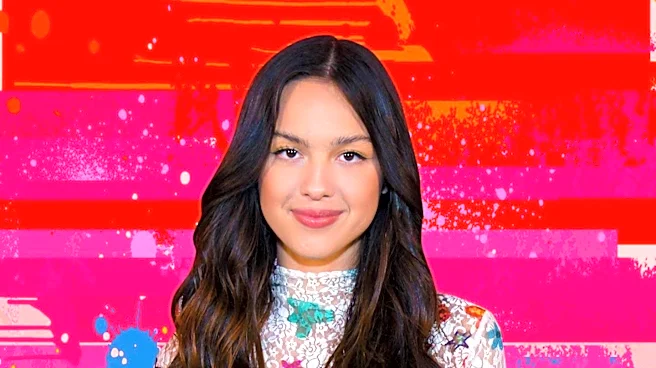
There is no reliable public evidence confirming that Olivia Rodrigo and Tyra Banks have ever met or collaborated professionally. Their names are primarily associated online through reaction memes, particularly one that pairs Rodrigo’s song “traitor” with
footage featuring Banks. This meme creates a humorous impression of Banks reacting emotionally to the music, but it does not establish that Banks was actually listening to Rodrigo’s song or responding to her personally. Both women have established successful careers in American entertainment, though in different fields. Rodrigo gained recognition through acting in Disney Channel's 'Bizaardvark' and 'High School Musical: The Musical: The Series,' before her songwriting career took off with the international hit 'Drivers License' and her debut album 'SOUR.' Banks built her career as an internationally recognized fashion model and later as a television host and producer for shows like 'America’s Next Top Model.'
Why It's Important?
This situation highlights the pervasive nature of internet culture and how online associations, such as memes, can create perceived connections between public figures that do not exist in reality. For public figures like Olivia Rodrigo and Tyra Banks, the digital landscape can shape public perception, sometimes independently of their actual interactions or professional endeavors. It underscores the need for media literacy and critical evaluation of online content, as humorous or viral content can be misinterpreted as factual. This phenomenon also demonstrates the power of social media in generating narratives and influencing public discourse, even when those narratives lack verifiable evidence. For the entertainment industry, it illustrates how artists' work can be recontextualized and disseminated in unexpected ways through fan-generated content.
Beyond the Headlines
The online association between Olivia Rodrigo and Tyra Banks, driven by a reaction meme, delves into the broader implications of digital media on celebrity culture and public perception. It exemplifies how internet humor can blur the lines between reality and fabrication, creating a 'shared reality' that is not grounded in actual events. This phenomenon raises questions about the authenticity of online interactions and the responsibility of consumers to discern credible information from viral content. Furthermore, it showcases the enduring impact of popular culture figures, where their images and works can be repurposed and reinterpreted by a global audience, often leading to new, unintended meanings and connections. This dynamic reflects a significant shift in how public figures are perceived and how their narratives are constructed in the digital age.