










What's Happening?
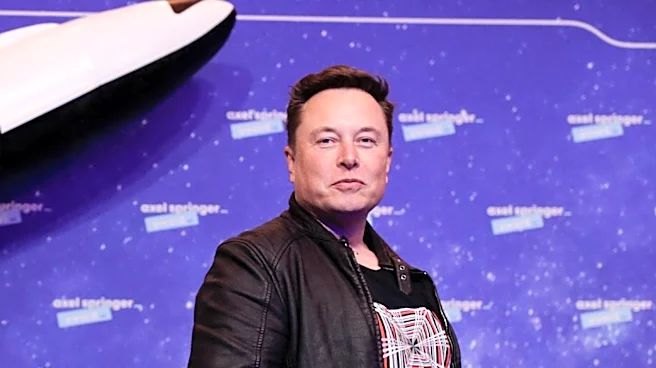
Elon Musk, who recently became the world's first trillionaire due to SpaceX's record-breaking debut on the Nasdaq, has seen his net worth decline significantly. SpaceX's stock, which initially surged to value the company at over $2.2 trillion, has fallen
below its IPO price. This drop has been attributed to a broader tech sector sell-off and market anxiety over AI-expenditure returns and potential Federal Reserve interest rate hikes. As a result, Musk's net worth has decreased from an intraday high of $1.4 trillion to the $900 billion range. Despite this correction, Musk remains the wealthiest person on Earth.
Why It's Important?
The decline in SpaceX's stock price and Musk's net worth highlights the volatility and speculative nature of high-valuation tech companies. This situation serves as a reminder to investors about the risks associated with investing in companies with sky-high valuations, especially in sectors like space and AI that require massive capital expenditures. The correction may pave the way for a valuation grounded in actual fundamentals, potentially benefiting long-term investors who focus on the company's real-world utility and infrastructure capabilities.
What's Next?
Investors and market analysts will likely continue to monitor SpaceX's stock performance and its impact on Musk's net worth. The broader tech sector may experience further fluctuations depending on economic indicators and policy decisions by the Federal Reserve. Long-term investors may reassess their strategies, focusing on companies with solid fundamentals rather than speculative momentum.
Beyond the Headlines
The situation with SpaceX and Musk's net worth underscores the challenges faced by companies in the tech sector, particularly those involved in ambitious projects like space exploration and AI development. It raises questions about the sustainability of such high valuations and the potential impact of market corrections on innovation and investment in these fields.