



What's Happening?
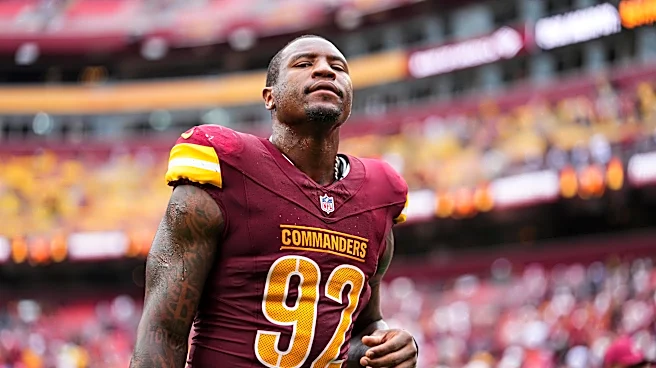
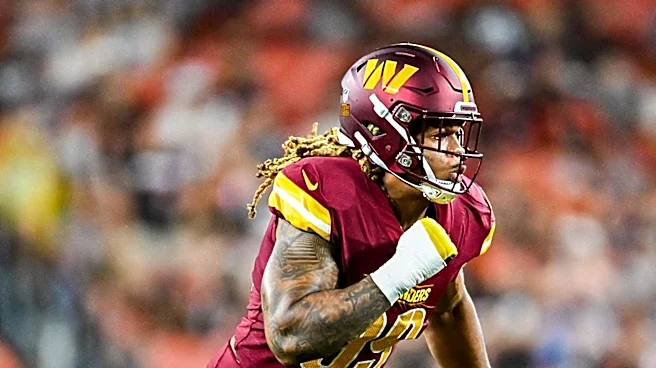
Washington Commanders edge rusher Dorance Armstrong has been suspended for the team's first regular season game without pay, effective August 30. The suspension stems from a violation of the NFL's Personal Conduct Policy, with eligibility for reinstatement
set for September 14. The specific incident leading to the suspension reportedly occurred last season, though the exact nature of Armstrong's transgression has not yet been publicly disclosed. Armstrong, a former Dallas Cowboys player, was a significant offseason acquisition for the Commanders, having followed head coach Dan Quinn from Dallas, where Quinn served as defensive coordinator. He signed a three-year, $33 million contract with Washington before the 2024 season and is expected to be a major defensive presence for the team. The Commanders reportedly followed NFL protocols in reporting the issue and cooperating with the league's investigation.
Why It's Important?
This suspension carries immediate and significant implications for the Washington Commanders, particularly as they prepare for their season opener. Dorance Armstrong was brought in as a key defensive player, expected to contribute substantially to the team's pass rush and overall defensive scheme. His absence for the first game will force the Commanders to adjust their defensive strategy and rely on other players to fill his role, potentially impacting their performance in a crucial early-season matchup. For Armstrong, the suspension not only results in a loss of pay but also marks a setback in his new chapter with the Commanders, potentially affecting team morale and his standing within the organization. It also highlights the NFL's continued enforcement of its Personal Conduct Policy, underscoring the league's commitment to maintaining certain standards of behavior for its players, even if the specifics of the violation remain undisclosed.
What's Next?
Dorance Armstrong's suspension will commence on August 30, rendering him ineligible to play in the Commanders' first regular season game. He will be eligible for reinstatement on September 14, meaning he could return for the team's second game, assuming no further issues arise. In the interim, the Commanders' coaching staff will need to determine how to best compensate for his absence, likely by elevating other defensive linemen or linebackers to take on increased responsibilities. The team will also await further details regarding the nature of the Personal Conduct Policy violation, which could influence public perception and internal team dynamics. Armstrong will likely focus on maintaining his fitness and readiness to return to play as soon as his suspension concludes, aiming to quickly reintegrate into the team and contribute to their season.
Beyond the Headlines
This incident underscores the broader challenges NFL teams face in managing player conduct and the league's role in enforcing its policies. While the specifics of Armstrong's violation are unknown, such suspensions often bring scrutiny to both the player and the organization. It raises questions about player accountability and the support systems in place to help athletes navigate personal and professional challenges. For the Commanders, this early-season disruption tests the depth of their roster and the adaptability of their coaching staff. It also serves as a reminder that off-field issues can significantly impact on-field performance and team success, regardless of a player's talent or contract value. The NFL's Personal Conduct Policy aims to uphold the league's image, and each enforcement action reinforces its authority over player behavior.