




What's Happening?
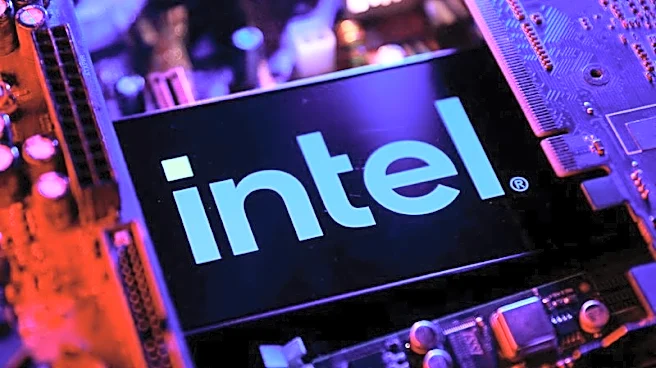
Intel reported better-than-anticipated third-quarter earnings, with adjusted earnings per share (EPS) of $0.52 against projections of $0.41, and revenue aligning with estimates at $16.5 billion, marking a 21% year-over-year increase. However, the company's
fourth-quarter revenue outlook fell short of Wall Street's expectations, projecting $15 billion to $16 billion, significantly below the anticipated $17 billion. This shortfall is primarily attributed to a worse-than-expected decline in PC sales, impacted by difficult comparisons to the previous year's Windows 10 end-of-life cycle and rising PC prices. Additionally, an incident at an Intel plant in Israel is expected to contribute approximately $300 million to the Q4 revenue miss. Despite the PC segment's struggles, Intel's data center sales exceeded projections, driven by strong demand for AI-related central processing units (CPUs). The company's Foundry business also performed strongly, generating $6.7 billion in Q3, surpassing estimates and growing 58% year-over-year, with reports of Google placing orders for its custom Tensor Processing Units and Nvidia in talks for chip manufacturing.
Why It's Important?
Intel's mixed financial results highlight the ongoing transition and challenges within the semiconductor industry. While the decline in PC sales signals a broader market trend affecting consumer electronics, the robust performance of its data center and foundry businesses underscores the growing demand for AI-related hardware and specialized chip manufacturing. The reported deals with major tech companies like Google and potential discussions with Nvidia for foundry services indicate Intel's increasing relevance as a contract chip manufacturer, a strategic pivot that could diversify its revenue streams and reduce its reliance on the volatile PC market. This shift is crucial for Intel's long-term competitiveness against rivals in the foundry space. The incident at the Israeli plant also introduces an unexpected operational challenge, impacting immediate revenue projections and potentially highlighting supply chain vulnerabilities.
What's Next?
Intel will likely continue to focus on expanding its Foundry business and capitalizing on the surging demand for AI-driven data center solutions. The company's ability to secure more high-profile customers for its manufacturing services will be key to its growth strategy. Investors will be closely watching Intel's performance in the coming quarters to see if its data center and foundry segments can offset the persistent weakness in PC sales. The company will also need to address any lingering impacts from the plant incident in Israel to ensure production stability. Further developments regarding potential partnerships with companies like Nvidia for chip manufacturing will be significant indicators of Intel's success in its foundry ambitions.
Beyond the Headlines
Intel's strategic emphasis on its foundry business represents a significant shift in its operational model, moving beyond its traditional integrated device manufacturer (IDM) role. This pivot positions Intel as a direct competitor to established foundry leaders, potentially reshaping the global semiconductor manufacturing landscape. The increasing demand for custom AI chips, as evidenced by Google's orders, suggests a future where specialized hardware tailored for AI workloads becomes paramount, driving innovation in chip design and manufacturing processes. This trend could lead to greater collaboration between chip designers and foundries, fostering a more interconnected and specialized semiconductor ecosystem. The challenges in the PC market also underscore the cyclical nature of the tech industry and the need for companies to diversify their portfolios to remain resilient.