





What's Happening?
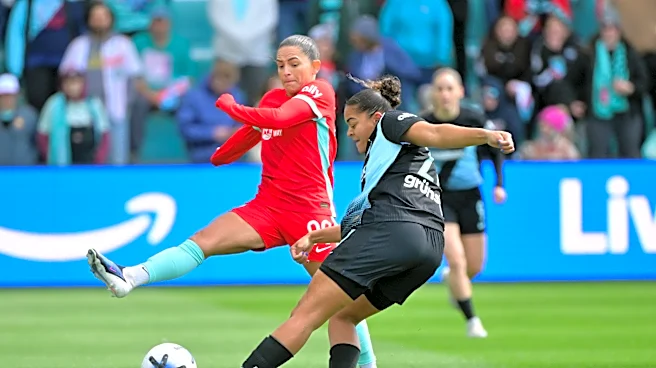
Midge Purce, a forward for the US Women's National Team and NWSL Champion, shares insights into her training routine and fitness philosophy. Purce emphasizes the importance of strength training, which she began seriously in college, to enhance her performance
on the field. Her regimen includes a mix of on-field training and gym workouts, focusing on exercises like side lunges and single-leg Romanian deadlifts to strengthen her adductors and hamstrings. Purce also highlights her ability to hold a seven-minute plank as a personal achievement, unrelated to soccer but indicative of her core strength. Her fitness goals are performance-based, aiming to maintain stamina and avoid injuries during 90-minute matches.
Why It's Important?
Purce's approach to fitness underscores the evolving nature of athletic training, where strength and conditioning are integral to performance and injury prevention. Her focus on specific muscle groups reflects a tailored approach to address personal weaknesses, a strategy that can benefit athletes across various sports. By sharing her routine, Purce provides a model for aspiring athletes, emphasizing the importance of consistent training and adaptation to one's physical needs. Her story also highlights the role of strength training in women's sports, promoting a narrative of empowerment and resilience.
What's Next?
As Purce continues her career, her training regimen will likely evolve to meet the demands of her sport and address any emerging physical challenges. Her commitment to fitness suggests she will remain a key player in her team, contributing to their success in upcoming competitions. The insights she shares may inspire other athletes to adopt similar training philosophies, potentially influencing broader trends in sports conditioning.
Beyond the Headlines
Purce's emphasis on strength training and injury prevention reflects broader trends in sports science, where data-driven approaches are increasingly used to optimize athlete performance. Her story also touches on the cultural aspects of sports, such as the camaraderie and shared experiences with teammates, which are vital to team dynamics. Additionally, her candidness about personal preferences and routines offers a glimpse into the life of a professional athlete, humanizing the often-glamorized world of sports.