



What's Happening?
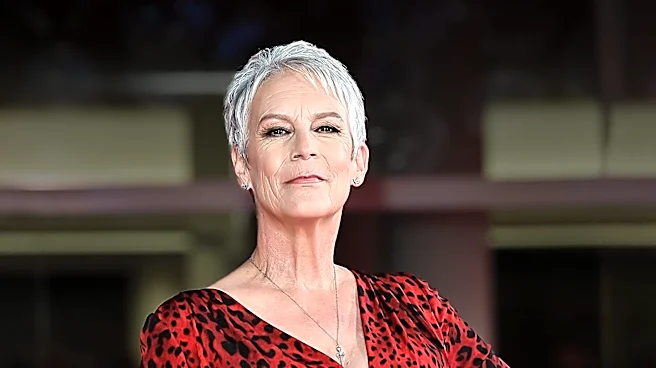
Jamie Lee Curtis, the acclaimed actress, made a deliberate decision around the year 2000, at the age of 42, to stop coloring her hair and embrace her natural gray. This choice was met with skepticism from some within the entertainment industry, who suggested
that having gray hair could negatively impact her career. Despite these warnings, Curtis remained steadfast in her decision. Today, her short, silver hairstyle has become one of her distinctive trademarks, symbolizing a broader movement among public figures to challenge conventional beauty standards and age gracefully in the public eye.
Why It's Important?
Jamie Lee Curtis's decision to embrace her natural gray hair is significant as it challenges long-standing beauty norms in Hollywood and society at large, which often pressure women to conceal signs of aging. Her stance contributes to a growing conversation about ageism and the unrealistic expectations placed on women, particularly in high-visibility professions. By openly displaying her gray hair, Curtis provides a powerful role model, encouraging authenticity and self-acceptance. This movement can influence beauty industries, potentially shifting demand towards products and services that celebrate natural aging rather than solely focusing on anti-aging solutions, and fostering a more inclusive representation of women in media.
What's Next?
The trend of public figures like Jamie Lee Curtis embracing natural gray hair is likely to continue gaining momentum, potentially leading to a more widespread acceptance of aging in the entertainment industry and beyond. This could result in more diverse portrayals of women in film and television, reflecting a broader range of ages and appearances. For the beauty and fashion industries, this shift might encourage the development of products that cater to natural hair colors and textures, rather than exclusively promoting dyes and anti-aging treatments. It also sets a precedent for future generations, suggesting that career longevity and personal authenticity are not mutually exclusive, even in image-conscious fields.
Beyond the Headlines
Jamie Lee Curtis's choice to go gray delves into deeper cultural and psychological implications surrounding aging and identity. It highlights the societal pressure on women to maintain a youthful appearance, often linking it to their perceived value and relevance. By rejecting this pressure, Curtis not only makes a personal statement but also contributes to a collective redefinition of beauty, emphasizing confidence and naturalness over artificial youthfulness. This movement can empower individuals to make choices about their appearance that align with their personal values, rather than conforming to external expectations. It also sparks conversations about the double standards often applied to men and women regarding aging in the public sphere, where gray hair in men is frequently seen as distinguished, while in women, it has historically been viewed as a sign of decline.