







What's Happening?
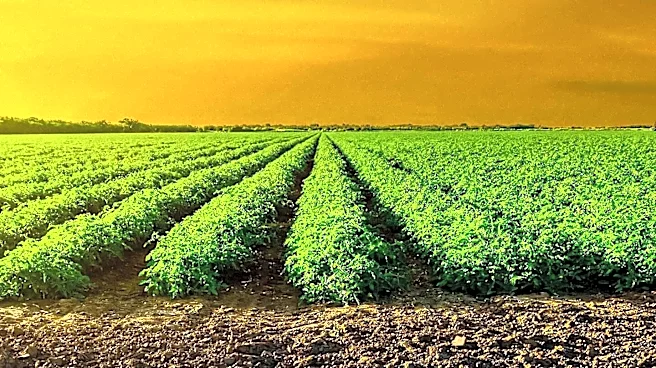
As Midwest farmers prepare for the 2027 planting season, historical data suggests that soybeans will likely be more profitable than corn. This trend has been consistent since 2012, with soybeans generally outperforming corn except in high-price years.
Factors contributing to this include high nitrogen fertilizer costs, which disadvantage corn, and general cost inflation. The analysis of corn-minus-soybean returns across Illinois regions shows that soybeans have been more profitable in most years, and this is expected to continue into 2027. The decision-making process for acreage allocation will be influenced by these profitability trends.
Why It's Important?
The anticipated profitability of soybeans over corn has significant implications for U.S. agriculture, particularly in the Midwest. Farmers' planting decisions will affect crop supply, market prices, and the agricultural economy. The shift towards soybeans could lead to changes in crop rotations and farming practices, impacting input suppliers and related industries. The profitability trends also reflect broader economic conditions, such as input costs and market demand, which are crucial for the agricultural sector's sustainability. Understanding these dynamics helps stakeholders make informed decisions and adapt to changing market conditions.
What's Next?
As farmers plan for the 2027 planting season, they will consider the profitability trends and adjust their acreage allocations accordingly. The shift towards soybeans may lead to increased soybean planting, affecting crop rotations and potentially leading to more soybeans following soybeans in some regions. This could have implications for soil health and pest management. The agricultural industry will continue to monitor input costs, market prices, and geopolitical factors that could influence crop profitability. Stakeholders will also watch for any policy changes or technological advancements that could impact farming practices and market dynamics.