


What's Happening?
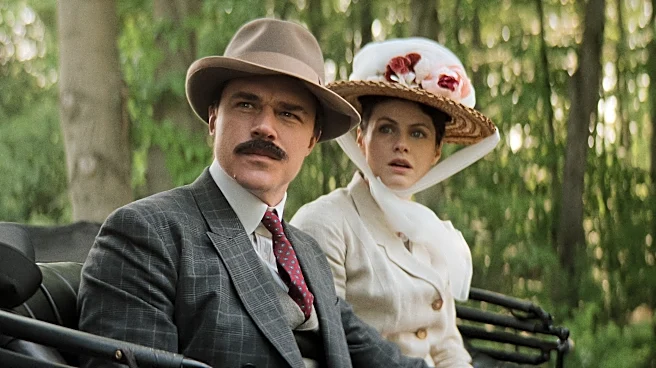
Angel Studios has released 'Hershey,' a new biopic starring Finn Wittrock as Milton Hershey, the founder of The Hershey Company. The film, directed by Mark Waters, presents a 'great man' biography, focusing on Hershey's journey from a young apprentice
in a candy shop to the creator of an American chocolate empire. The narrative highlights Hershey's philanthropic endeavors and his vision to make chocolate accessible to everyone, not just the elite. The movie begins with a young Milton Hershey, played by James Kelly, learning the art of candy making in Lancaster, Pennsylvania. It then transitions to his adult life in Philadelphia, where he initially struggles with his caramel business before finding success and eventually shifting his focus to chocolate. The film emphasizes Hershey's desire to create an affordable chocolate bar, paying his workers well, and establishing the factory town of Hershey, Pennsylvania, as a workers' paradise. The story also touches upon his marriage to Kitty (Alexandra Daddario) and her influence on his decision to establish a school for impoverished children.
Why It's Important?
The release of 'Hershey' is significant as it continues Angel Studios' trend of producing films that aim to evoke a sense of traditional American values and inspire audiences through historical figures. This biopic contributes to the cultural landscape by presenting a simplified, heroic portrayal of a prominent American industrialist, potentially shaping public perception of historical business leaders. The film's focus on Hershey's philanthropic spirit and his goal of democratizing chocolate consumption could resonate with audiences interested in narratives of innovation and social responsibility. For the confectionery industry, the movie serves as a nostalgic look at the origins of one of America's most iconic brands, potentially boosting interest in Hershey's products. Furthermore, the film's approach to storytelling, characterized by its 'paint-by-numbers' simplicity and lack of internal conflict for its protagonist, reflects a particular style of historical filmmaking that prioritizes comfort and inspiration over complex character studies, which may influence future biographical productions.
What's Next?
The reception of 'Hershey' by audiences and critics will likely influence Angel Studios' future production choices, particularly regarding historical biopics. If the film performs well, it could encourage the studio to invest in more 'great man' biographies that align with its mission of delivering inspiring, family-friendly content. The movie's release may also spark renewed interest in the history of American confectionery and the legacy of Milton Hershey, potentially leading to increased sales for The Hershey Company or a surge in historical tourism to Hershey, Pennsylvania. Additionally, the film's portrayal of corporate philanthropy and worker welfare could contribute to ongoing discussions about business ethics and social responsibility in contemporary society. Future discussions around the film may also involve comparisons to other biopics, examining how different studios choose to interpret and present historical figures to modern audiences.
Beyond the Headlines
Beyond its immediate release, 'Hershey' touches upon deeper themes regarding the construction of historical narratives in popular culture. The film's decision to present Milton Hershey without 'demons or inner conflicts' reflects a broader trend in certain biographical films to create idealized figures, which can simplify complex historical realities. This approach raises questions about the responsibility of filmmakers in portraying historical figures accurately versus creating inspiring, albeit less nuanced, stories. The movie also subtly explores the American dream through the lens of entrepreneurship and innovation, suggesting that success can be achieved through perseverance and a commitment to quality and accessibility. The film's emphasis on Hershey's desire to make chocolate affordable for everyone highlights a historical shift in consumer culture, where luxury goods became accessible to the masses, fundamentally altering American consumption patterns and the industrial landscape. This narrative also implicitly comments on the intersection of capitalism and philanthropy, presenting a model where business success is intertwined with social good.