






What's Happening?
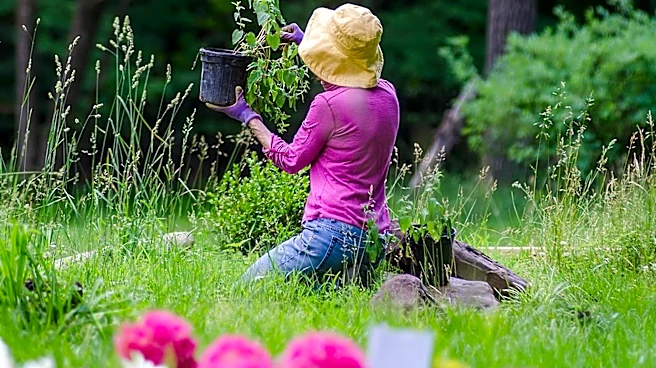
A new viral trend called 'Nonnamaxxing' is gaining significant traction on TikTok and Instagram, primarily among Gen Z. This trend involves young people staging and sharing content that emulates an idealized slow Italian grandmother's lifestyle. Activities
depicted include handmade pasta preparation, gardening, knitting, and generally embracing a life perceived as free from the pressures of modern 'hustle culture.' The term 'Nonnamaxxing' combines 'nonna,' the Italian word for grandmother, with the suffix '-maxxing,' which originated from 'Looksmaxxing' (optimizing attractiveness) and evolved through 'Solo-Maxxing' (optimizing solitude). This trend is presented as a deliberate escape from an unmanageable present into an imagined past, offering a counter-narrative to the demands of contemporary society. While it promotes deceleration, the trend itself is often meticulously staged and optimized for social media engagement, creating a paradox of 'slowness in high-performance format.'
Why It's Important?
The 'Nonnamaxxing' trend highlights a growing desire among younger generations for a slower, more mindful existence, contrasting sharply with the fast-paced, achievement-oriented culture often promoted online. It reflects a broader societal yearning for well-being and an escape from burnout, indicating a potential shift in lifestyle priorities. The trend's popularity on platforms like TikTok and Instagram underscores the influence of social media in shaping cultural norms and aspirations, even when those aspirations are based on idealized or historically inaccurate representations. This movement could influence consumer behavior, driving demand for products and experiences associated with traditional crafts, home-cooked meals, and mindful living. It also signals a critique of modern progress and feminism from the perspective of some young women, who question the benefits of constant striving.
What's Next?
The 'Nonnamaxxing' trend is likely to continue evolving on social media, potentially inspiring new sub-trends or influencing related lifestyle movements. As more individuals adopt and adapt this aesthetic, we may see an increase in content creation around traditional skills, home-based activities, and digital detoxes. Businesses in the wellness, food, and craft industries might leverage this trend by offering products and services that cater to the 'slow living' aesthetic, such as pasta-making kits, gardening supplies, or knitting workshops. There could also be further academic or cultural discussions analyzing the authenticity and implications of such trends, particularly regarding their historical accuracy and their role in addressing genuine societal anxieties about work-life balance and mental health. The trend may also prompt further exploration into the 'Blue Zone' concept, which scientifically links certain lifestyle factors to longevity.
Beyond the Headlines
Beyond its surface appeal, 'Nonnamaxxing' reveals deeper societal implications, particularly concerning the commodification of well-being and the romanticization of the past. The trend, while advocating for a slower life, often operates within the very 'optimization' framework it seeks to escape, as participants meticulously curate their 'slow' lives for an online audience. This raises questions about the authenticity of such escapes and whether they truly offer respite or merely transform well-being into another performance metric. Furthermore, the idealized image of the 'nonna' often omits the historical realities of hardship, labor, and limited autonomy faced by women in past generations, highlighting a selective appropriation of cultural aesthetics. This trend also touches upon class issues, as 'slowness' and 'leisure' are often luxury goods, converting demonstrative leisure into symbolic capital, while the realities of unpaid care work remain largely invisible.