






What's Happening?
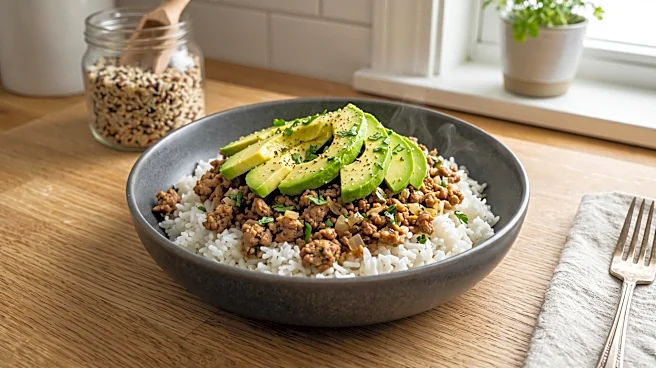
A new social media trend, dubbed 'boy kibble,' involves individuals, primarily men, adopting a highly simplified and repetitive eating plan focused on high protein intake for convenience. This dietary approach typically consists of a base of rice with
ground meat (turkey, chicken, or beef), often with avocado for healthy fats, and minimal other ingredients or spices. Content creators like Nick Finke, a proponent of 'boy kibble,' emphasize its ease of meal preparation, often batch cooking for an entire week. The trend is gaining traction among those looking to meet high protein goals, particularly for fitness purposes, and aims to reduce the thought and effort involved in daily meal planning. It stands in contrast to another social media trend, 'girl dinner,' which involves assembling various snacks for a meal.
Why It's Important?
The 'boy kibble' trend highlights a growing societal emphasis on convenience and efficiency in dietary choices, particularly among individuals with demanding fitness goals or busy lifestyles. While it offers a straightforward way to achieve high protein intake, experts like Dr. Zachary Mulvihill, an integrative medicine expert at Weill Cornell Medicine, and dietitian Natalie Mokari, raise concerns about its nutritional balance. The typical 'boy kibble' meal often lacks the recommended proportion of vegetables, which are crucial for a diverse range of nutrients. This trend could lead to nutrient deficiencies over the long term if not supplemented with other varied meals. For the U.S. health and wellness industry, this trend signifies a market for convenient, protein-focused meal solutions, but also underscores the need for education on balanced nutrition to counteract potentially restrictive or unhealthy dietary practices promoted online. It reflects a broader cultural shift towards simplified eating, driven by social media influence.
What's Next?
The 'boy kibble' trend is likely to continue evolving on social media, with proponents and critics further debating its health implications. We may see more content creators offering variations that attempt to address the nutritional concerns, such as incorporating more vegetables or diverse food groups. Health professionals and dietitians will likely increase their efforts to educate the public on balanced eating, emphasizing the importance of nutrient variety beyond just protein and carbohydrates. Food manufacturers and meal prep services might capitalize on this trend by offering pre-portioned, high-protein, and convenient meal options, potentially with improved nutritional profiles. The long-term impact on public health will depend on whether individuals adopt these diets as a temporary solution or a sustained lifestyle, and if they seek professional guidance to ensure adequate nutrient intake.
Beyond the Headlines
Beyond the immediate dietary discussion, 'boy kibble' reflects deeper cultural and psychological aspects of modern eating habits. The appeal of such a simplified diet can be linked to decision fatigue, where individuals seek to minimize choices in their daily routines. It also touches upon gendered perceptions of food and eating, as evidenced by the contrasting 'boy kibble' and 'girl dinner' trends, which may reinforce traditional or stereotypical views on male and female dietary preferences. The reliance on social media for dietary advice also raises questions about the credibility of information and the influence of online communities on personal health choices. This trend could be seen as a symptom of a society grappling with time constraints, health aspirations, and the pervasive influence of digital platforms, prompting a re-evaluation of how we approach food, nutrition, and well-being in an increasingly complex world.