


What's Happening?
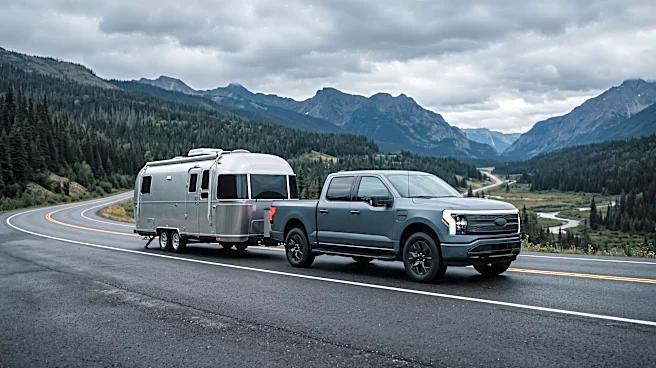
A former owner of a Rivian R1T electric pickup truck has switched to a GMC Sierra EV, specifically for its larger battery and extended towing range. This decision was made after experiencing limitations with the Rivian R1T when towing, particularly on long
highway trips. Despite the upgrade to the Sierra EV, the driver encountered significant range reduction while towing a camper towards Copper Harbor into strong headwinds and adverse weather conditions. The vehicle's efficiency dropped to 0.6 miles per kWh, leading to an arrival at a charging station with only 4% battery remaining. This experience highlights the persistent challenges electric trucks face with range anxiety, especially when towing heavy loads in unfavorable weather, where aerodynamic drag and speed heavily impact energy consumption. Other Rivian R1T owners have reported similar frustrations, with one giving up on EV towing after experiencing a practical range cap of 80 miles when towing a 3,500-pound boat above 60 mph.
Why It's Important?
This situation underscores a critical hurdle for the broader adoption of electric pickup trucks in the U.S. market, particularly for consumers who require towing capabilities for recreational or professional purposes. The experiences of these drivers illustrate that even with larger battery capacities, factors like weather, speed, and aerodynamic drag significantly diminish an EV's practical range, potentially leading to inconvenience and range anxiety. This could impact sales and consumer confidence in electric trucks for heavy-duty applications. For manufacturers like Rivian and GMC, these real-world scenarios provide valuable feedback on the need for further advancements in battery technology, charging infrastructure, and aerodynamic design to meet diverse consumer demands. The challenges faced by these owners could also influence public policy discussions regarding charging infrastructure development and incentives for electric vehicle adoption, especially in rural or less-serviced areas where charging options might be scarce.
What's Next?
The experiences of these electric truck owners are likely to fuel ongoing discussions within the automotive industry regarding the development of more efficient and longer-range electric vehicles, particularly for towing. Manufacturers may focus on innovations in battery technology to increase energy density and improve performance under load, as well as explore advanced aerodynamic designs for trucks and trailers to mitigate drag. The feedback from these early adopters could also prompt a re-evaluation of charging infrastructure deployment, emphasizing the need for more robust and conveniently located high-speed charging stations capable of accommodating larger vehicles with trailers. Consumers considering electric trucks for towing will likely continue to weigh the benefits of electric power against the current limitations in range and charging convenience, potentially influencing their purchasing decisions towards models with proven long-distance towing capabilities or hybrid alternatives.
Beyond the Headlines
The challenges faced by electric truck owners in towing scenarios extend beyond mere technical specifications, touching upon the psychological aspect of 'range anxiety' and the practicalities of integrating EVs into diverse lifestyles. For many, a truck is not just a mode of transport but a tool for work and recreation, often involving towing. The current limitations highlight a gap between the promise of electric vehicles and the real-world demands of certain user groups. This could lead to a bifurcated market where electric trucks are favored for local, lighter-duty tasks, while traditional internal combustion engine vehicles or hybrids retain dominance for long-haul towing. Furthermore, the need for frequent and accessible charging for towing could accelerate the development of innovative charging solutions, such as mobile charging units or dedicated EV towing corridors with ultra-fast chargers. This also raises questions about the environmental impact of manufacturing larger batteries to achieve extended range, balancing sustainability goals with consumer utility.