







What's Happening?
Vistra Corp., a major U.S. power producer and electricity retailer, announced a record third quarter for adjusted EBITDA and net income, leading the company to raise the midpoint of its full-year earnings outlook. This positive financial report caused
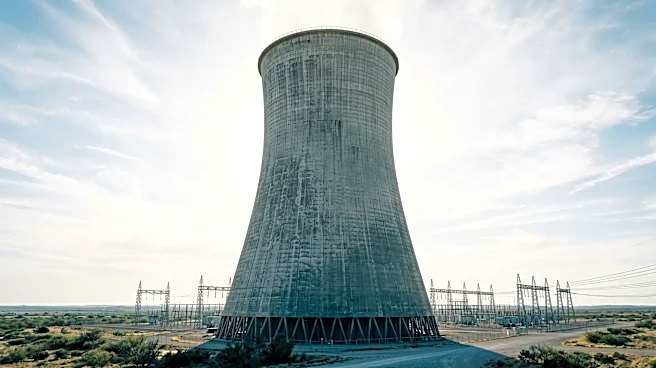
a significant surge in Vistra's stock price in early November. The rally followed a period of steep decline in the days after midterm elections, where shifts in Texas state leadership raised concerns among investors about future data center growth policies in the state. Texas is a critical market for Vistra's generation and retail operations. The company has also been active in securing long-term power purchase agreements, notably with Meta, to supply nuclear electricity from three plants in the PJM region, which include uprates to increase output. Additionally, Vistra has agreements with Amazon and received a conditional federal loan commitment from the Department of Energy to expand its nuclear generation capacity. The company is also growing its natural gas fleet through an acquisition from Cogentrix Energy and has joined a joint venture to develop new AI data centers.
Why It's Important?
Vistra's performance and strategic moves are significant for the U.S. energy sector, particularly given the increasing demand for electricity from data centers and the broader push for electrification. The company's ability to secure long-term nuclear power contracts with major technology firms like Meta and Amazon highlights the growing corporate demand for reliable, carbon-free electricity to meet climate goals. Federal support, in the form of a Department of Energy loan commitment, underscores a national interest in expanding nuclear generation capacity, which can reduce the cost of upgrading reactors and improve project returns. The acquisition of natural gas plants from Cogentrix Energy enhances Vistra's dispatchable capacity, crucial for meeting peak demand and providing backup for intermittent renewable sources. However, policy uncertainties in Texas regarding data center development pose a risk, as the state is a key market for Vistra, potentially impacting future demand growth and investor confidence in the utility sector.
What's Next?
Investors and industry observers will closely monitor policy developments in Texas concerning data center growth, as these could significantly influence Vistra's future demand and operational landscape. The progress of Vistra's nuclear uprate projects and the completion of the Cogentrix acquisition will be key indicators of the company's strategic execution and capacity expansion. Further announcements regarding new data center power contracts will also be crucial, as these long-term agreements provide stable revenue streams and reflect the ongoing demand from the technology sector. Wholesale power prices will continue to be a factor, given Vistra operates in competitive markets where prices fluctuate with supply and demand. The company's guidance for the upcoming year will provide insights into its outlook amidst evolving market conditions and policy environments, offering a clearer picture of its growth trajectory and potential challenges.
Beyond the Headlines
Vistra's strategic emphasis on nuclear power, supported by federal loans and corporate contracts, signals a potential resurgence in the U.S. nuclear industry. This trend is driven by the dual pressures of increasing electricity demand, particularly from energy-intensive AI data centers, and the imperative for carbon-free energy sources to combat climate change. The long-term contracts with tech giants like Meta and Amazon illustrate a shift in corporate procurement towards stable, clean energy, potentially setting a precedent for other industries. This could lead to broader investment in extending the life of existing reactors and developing new nuclear technologies. However, the policy uncertainties in Texas highlight the ongoing tension between economic development, energy demand, and state-level regulatory environments. This dynamic could influence where future data centers are located and how energy infrastructure is developed, potentially leading to a more fragmented national energy policy landscape and varying regional economic impacts.