






What's Happening?
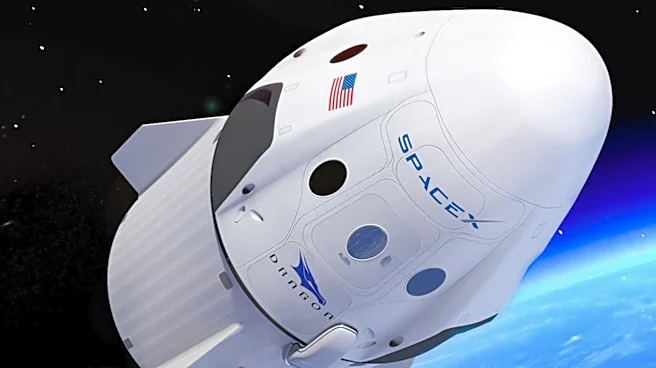
SpaceX shares have recently traded around $126, falling below their initial public offering (IPO) price of $135. This decline follows the stock's July highs. Despite the current trading level, analysts have issued a wide range of price targets for SpaceX,
with an arithmetic mean of approximately $273, rounded to a central target of $270. The median target is around $250, with most targets clustering between $200 and $300. However, there's a significant divergence, including a high target of $800 from Raymond James' Brian Gesuale and a low of $115 from CFRA. The company's market capitalization was approximately $1.82 trillion at Friday's close on November 6, 2026. Wall Street anticipated third-quarter 2026 revenue near $12.9 billion, with full-year revenue projections ranging from $22 billion to $30 billion.
Why It's Important?
The performance of SpaceX's stock below its IPO price, despite generally optimistic analyst ratings, highlights the inherent volatility and speculative nature of high-growth technology companies in the public market. The wide disparity in analyst price targets, ranging from $115 to $800, underscores the uncertainty surrounding the company's future valuation and the diverse interpretations of its long-term potential. This situation is critical for investors, as it indicates a lack of consensus on the company's intrinsic value and future growth trajectory. The ability of SpaceX to reach the higher price targets will depend heavily on sustained Starlink subscriber growth, progress in Starship's orbital economics, and consistent execution against revenue expectations. The current trading below the IPO price could also signal investor caution regarding valuation concerns and the company's continued heavy investment phase.
What's Next?
Investors will be closely monitoring several key factors to assess SpaceX's future stock performance. These include quarterly earnings reports, Starlink subscriber and revenue figures, and significant milestones related to the Starship program. Lockup expirations, which could introduce more shares into the market, will also be a critical event to watch. Analyst target revisions based on new data and company performance will provide further guidance. Macroeconomic conditions and interest rate expectations will also play a role, as they typically influence the valuation of high-multiple growth stocks. The company's ability to demonstrate consistent progress in its core businesses and achieve its ambitious development goals will be crucial for its stock to reclaim and surpass its IPO price and move towards the higher analyst targets.
Beyond the Headlines
The trajectory of SpaceX's stock extends beyond mere financial metrics, reflecting broader investor sentiment towards the commercial space industry and disruptive technologies. The company's success or struggles could influence future investment in space exploration and satellite internet services. The debate among analysts regarding valuation versus growth potential highlights a fundamental tension in modern markets: how to accurately price companies that are redefining industries but may not yet be consistently profitable. The significant influence of Starlink and Starship on analyst projections underscores the importance of these ventures to SpaceX's long-term vision and market perception. The outcome of SpaceX's public market journey could serve as a bellwether for other private, high-valuation technology companies considering an IPO, shaping future market expectations for innovation-driven enterprises.