






What's Happening?
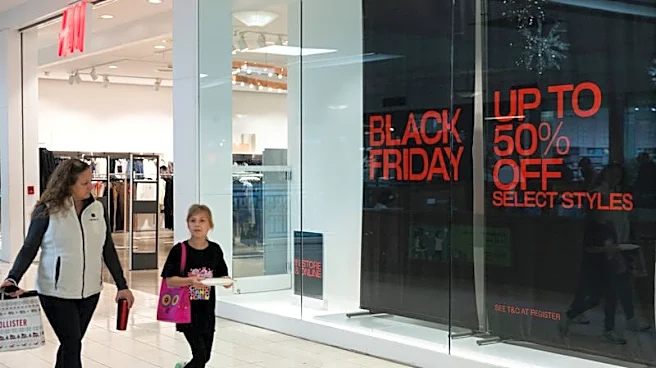
U.S. shoppers are projected to engage in a significant spending spree during the 2026 Black Friday to Cyber Monday period, with 87% planning purchases, marking a 10-year high, according to a Deloitte survey. The average shopper is expected to spend $1,654
from October to November, a 4% increase from 2025. Gen Z (18-29) and Millennials (30-45) are anticipated to drive this trend, collectively accounting for 50% of all holiday spending for the first time. Despite this enthusiasm, a substantial portion of consumers, 66%, are carrying debt from the 2025 holiday season, as reported by National Debt Relief. Deloitte also found that approximately one in four shoppers had already depleted their holiday budgets by the end of October. Experts suggest that emotional spending, influenced by holiday stress and peer pressure, often leads consumers to exceed their financial limits, frequently relying on credit cards and 'buy now, pay later' options.
Why It's Important?
This anticipated surge in holiday spending, particularly during the Black Friday-Cyber Monday sales, highlights a complex economic landscape for U.S. consumers. While increased spending could signal consumer confidence and provide a boost to retailers, the underlying reliance on debt raises concerns about financial stability. The significant participation of Gen Z and Millennials indicates a generational shift in purchasing power and holiday shopping habits, which could influence future marketing strategies and product offerings. The prevalence of debt from previous holiday seasons, coupled with current economic pressures such as elevated gas prices due to President Trump’s actions in Iran, and persistent inflation, suggests that many consumers may be stretching their finances thin. This could lead to a cycle of debt that impacts household budgets well into the new year, potentially affecting broader economic indicators like consumer credit and savings rates.
What's Next?
As the holiday shopping season progresses, financial experts are advising consumers to establish clear budgets and consider alternative gift-giving methods, such as secondhand purchases or handmade items, to mitigate debt accumulation. Ohio State University Extension educator Jessica Lowe emphasizes the importance of open communication with loved ones regarding financial constraints during the holidays. The trend of increased spending alongside rising debt suggests that financial literacy and responsible spending initiatives may become more critical. Retailers will likely continue to offer various payment options, including 'buy now, pay later' schemes, which could further facilitate spending but also contribute to consumer debt. The economic conditions, including inflation and mortgage rates, will continue to influence consumer behavior and the overall financial health of U.S. households beyond the holiday season.
Beyond the Headlines
The juxtaposition of heightened consumer enthusiasm for holiday shopping and the widespread issue of pre-existing debt reveals a deeper societal challenge regarding financial well-being in the U.S. The influence of emotional spending, driven by holiday pressures, underscores the psychological aspects of consumer behavior that often override rational financial planning. The reliance on credit cards and 'buy now, pay later' services, while offering immediate gratification, can mask underlying financial vulnerabilities and contribute to long-term debt cycles. This situation also highlights the impact of broader economic factors, such as inflation and energy costs, on the average American household's ability to manage discretionary spending. The generational shift in spending power towards Gen Z and Millennials suggests that future economic trends and consumer habits will increasingly be shaped by these demographics, potentially leading to new financial products and services tailored to their spending patterns and debt management needs.