


What's Happening?
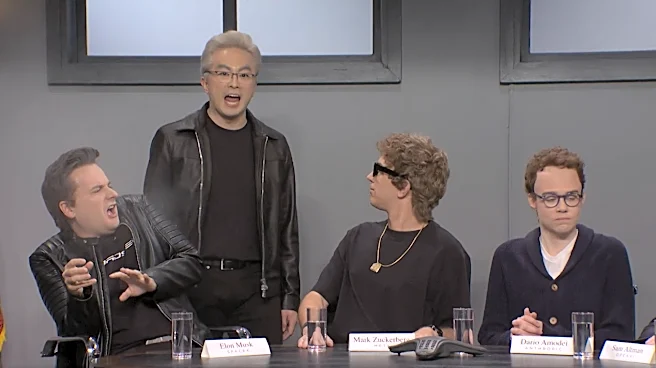
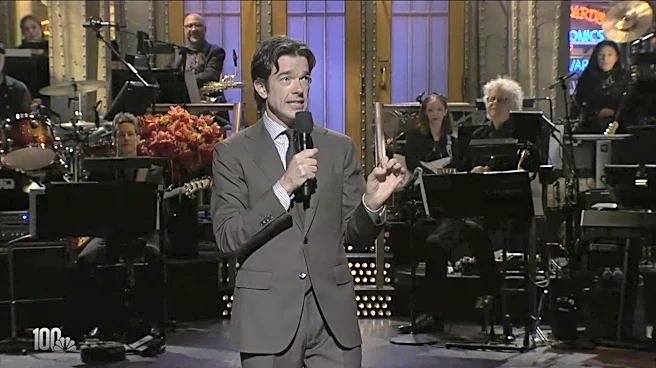
A recent 'Saturday Night Live' cold open depicted a CIA official, played by host John Mulaney, briefing prominent tech CEOs on how to avoid being duped by foreign spies. The skit featured Meta CEO Mark Zuckerberg (Andrew Dismukes), Tesla CEO Elon Musk
(Jeremy Culhane), Palantir chairman Peter Thiel (James Austin Johnson), OpenAI CEO Sam Altman (Ben Marshall), and Anthropic CEO Dario Amodei (Jane Wickline). The CIA official bluntly informed them about the difference between genuine romantic interest and potential espionage. When the CEOs argued for their trustworthiness, the official cited recent technology failures, such as grounded planes and Microsoft Outlook outages. The segment culminated with a surprise appearance by Bowen Yang as a disgraced former NVIDIA president Jensen Huang, who advised the tech leaders, 'Fellas, don't be like me,' emphasizing that women are generally not attracted to 'guys like us,' which he suggested was a factor in their rise to power.
Why It's Important?
This 'Saturday Night Live' skit reflects and satirizes ongoing public perceptions and anxieties surrounding the tech industry and national security. The portrayal of tech CEOs as socially awkward and susceptible to manipulation by foreign agents taps into a broader cultural commentary about the immense power wielded by these individuals versus their perceived lack of real-world acumen or social intelligence. The skit also highlights public frustration with technology failures, directly linking them to the perceived fallibility of tech leaders. By bringing in a character like Jensen Huang to deliver a self-deprecating warning, SNL critiques the insular nature of the tech elite and the potential vulnerabilities this creates for national security, while also poking fun at the personal lives and public images of these influential figures.
What's Next?
The 'Saturday Night Live' skit, while comedic, contributes to the ongoing public discourse about the role of tech leaders in national security and their public image. Such portrayals can influence public opinion and potentially encourage further scrutiny of the tech industry's practices and the personal conduct of its executives. While unlikely to trigger direct policy changes, the skit reinforces existing narratives about tech leaders' social disconnect and potential vulnerabilities. It may also prompt further comedic or critical takes on the subject in other media, continuing to shape public perception. The recurring theme of tech leaders being out of touch or naive could become a more entrenched part of their public persona, impacting how they are viewed by both the general public and policymakers.
Beyond the Headlines
The SNL skit delves into deeper cultural anxieties about the concentration of power in the hands of a few tech billionaires and their perceived social ineptitude. It subtly questions whether individuals with such immense influence over global technology and information are adequately equipped to navigate complex geopolitical landscapes, especially concerning national security. The humor serves as a vehicle for social commentary, highlighting a perceived disconnect between technological prowess and practical wisdom or emotional intelligence. Furthermore, the skit touches on gender dynamics within the tech world, using humor to critique the often male-dominated and socially isolated environment that some believe characterizes the industry's upper echelons. This comedic take reflects a broader societal unease about who controls the future of technology and whether they are truly prepared for the responsibilities that come with it.